Gqeberha, South Africa
Landing Point · ZA South Africa
Connected Cables
| Cable | Status |
|---|---|
| 2Africa | Active |
Live Performance
RTT measurements to this landing point from 2026-05-08 through 2026-09-29 - live ICMP round-trip time via our monitoring probes. Recomputed daily. ✓ No anomalies detected in the monitored period.
Measurement sources
| Probe | Location | Samples | Avg |
|---|---|---|---|
| #6410 own probe | Sao Paulo BR | 142 | 333.3 ms |
| #7062 own probe | Cape Town ZA | 142 | 15.9 ms |
| #6427 own probe | Sydney AU | 140 | 403.3 ms |
| own probe | Jerusalem IL | 6 | 241.3 ms |
| own probe | Minsk BY | 4 | 250.1 ms |
| own probe | Almaty KZ | 4 | 288.1 ms |
| own probe | Tbilisi GE | 4 | 229.3 ms |
| own probe | Moscow RU | 4 | 208.0 ms |
| #761 | control probe | 3 | 90.1 ms |
| own probe | Sevastopol UA | 1 | 268.0 ms |
| own probe | Saint Petersburg RU | 1 | 203.2 ms |
About Gqeberha, South Africa
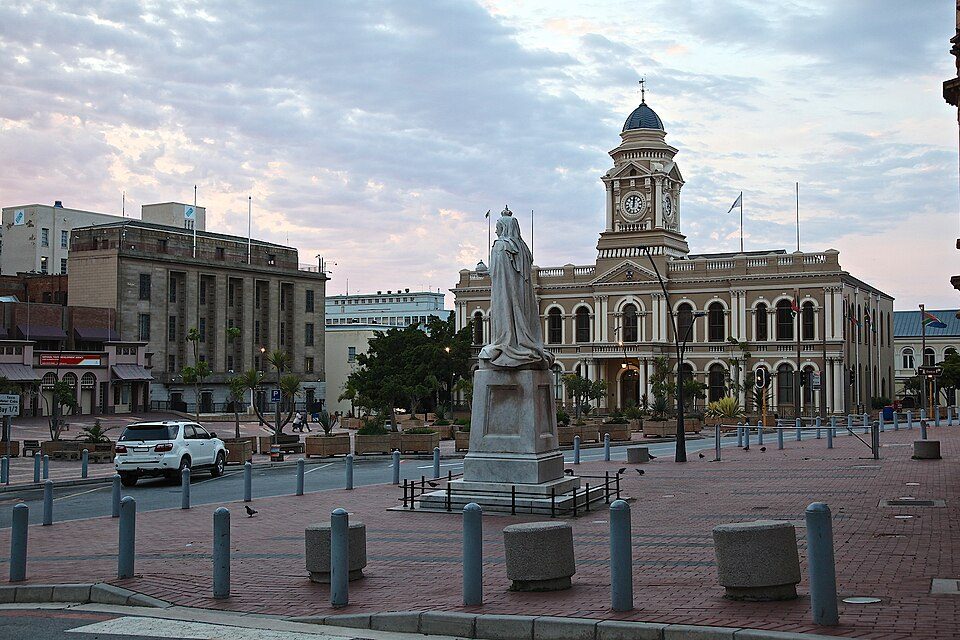
Gqeberha: Submarine Cable Landing Point
Gqeberha, also known as Port Elizabeth, is a major seaport city on the southeastern coast of South Africa, situated in the Eastern Cape province. As one of seven submarine cable landing points in South Africa, Gqeberha hosts one international submarine cable, connecting the city directly into a wide network spanning the African continent and beyond. That single cable, 2Africa, is among the longest submarine cable systems in the world, giving Gqeberha a place on an intercontinental route linking South Africa with West Africa, the Horn of Africa, and the Arabian Gulf region.
The 2Africa cable system places Gqeberha within a corridor that runs along both the western and eastern coasts of Africa, bridging geographically distant regions in a single continuous system. While Gqeberha is a single-cable landing point, the reach of 2Africa across multiple continents means its connectivity extends far beyond the immediate coastal zone of the Eastern Cape.
Cables Landing at Gqeberha
2Africa is a submarine cable system stretching approximately 45,000 kilometres, making it one of the longest cable systems ever deployed. Reaching ready-for-service status in 2024, it connects Gqeberha to a broad set of countries including Angola, Bahrain, Comoros, Côte d'Ivoire, the Democratic Republic of Congo, and Djibouti, among others. The cable's geographic span covers both Atlantic and Indian Ocean routes, linking southern Africa to West African nations, the Horn of Africa, and Gulf states. For Gqeberha, this represents a direct undersea connection into a network of intercontinental cable infrastructure routed across some of the world's most significant maritime corridors.
Regional Context
Among South Africa's eight submarine cable landing points, Gqeberha ranks alongside Cape Town as a single-cable landing point, placing it toward the lower end of the national cable count spectrum. By contrast, Amanzimtoti and Mtunzini each host four cables, and Melkbosstrand hosts three, making those sites the most cable-dense landing points in the country. Gqeberha's participation in the 2Africa system nonetheless connects it to a modern, large-scale cable deployment that the Eastern Cape had not previously been served by in earlier decades of South African submarine cable development.
Network Role
Gqeberha functions as a single-cable terminus within South Africa's submarine cable landscape, serving as the Eastern Cape's dedicated entry point into international undersea connectivity. Through 2Africa, the city connects southward from the African continent toward the rest of the cable's extensive route, which traverses both the Atlantic and Indian Ocean coasts of Africa before reaching the Arabian Peninsula. This positions Gqeberha as a geographically distinct node on the 2Africa system, separate from South Africa's other landing points clustered further along the KwaZulu-Natal and Western Cape coastlines.
As a terminus on one of the longest submarine cable systems deployed to date, Gqeberha adds geographic diversity to South Africa's overall landing point map. In a national submarine cable graph where most capacity concentrates at a handful of multi-cable hubs, Gqeberha's role as the sole Eastern Cape landing point ensures that the region maintains a direct, independent connection to the intercontinental submarine cable network.
What next: Gqeberha, South Africa in the global directory of cable landing points; see surrounding routes on the interactive submarine cable map or follow live network monitoring.
Other Landing Points in South Africa
Landing Point
- CountryZA South Africa
- Coordinates33.9625°S 25.6233°E
- Connected Cables1
See Real Cable Routes
View actual submarine cable routing from Gqeberha, South Africa - with backbone nodes, distance calculations, and latency estimates
Open Calculator →