Faial, Portugal
Landing Point · PT Portugal
Connected Cables
| Cable | Status |
|---|---|
| Azores Fiber Optic System (AFOS) | Active |
| Flores-Corvo Cable System | Active |
Live Performance
RTT measurements to this landing point from 2026-03-24 through 2026-10-13 - live ICMP round-trip time via our monitoring probes. Recomputed daily. ✓ No anomalies detected in the monitored period.
Measurement sources
| Probe | Location | Samples | Avg |
|---|---|---|---|
| own probe | Minsk BY | 14 | 91.4 ms |
| own probe | Tbilisi GE | 9 | 90.5 ms |
| own probe | Jerusalem IL | 9 | 91.4 ms |
| own probe | Almaty KZ | 8 | 136.6 ms |
| own probe | Moscow RU | 7 | 77.0 ms |
| #6427 own probe | Sydney AU | 4 | 282.7 ms |
| own probe | Kyiv UA | 4 | 64.4 ms |
| #6487 | control probe | 3 | 173.2 ms |
| #50483 | control probe | 3 | 31.1 ms |
| own probe | Sevastopol UA | 3 | 99.6 ms |
| own probe | Saint Petersburg RU | 3 | 83.4 ms |
| own probe | Odessa UA | 2 | 83.1 ms |
| #6568 own probe | Singapore SG | 1 | 177.2 ms |
About Faial, Portugal
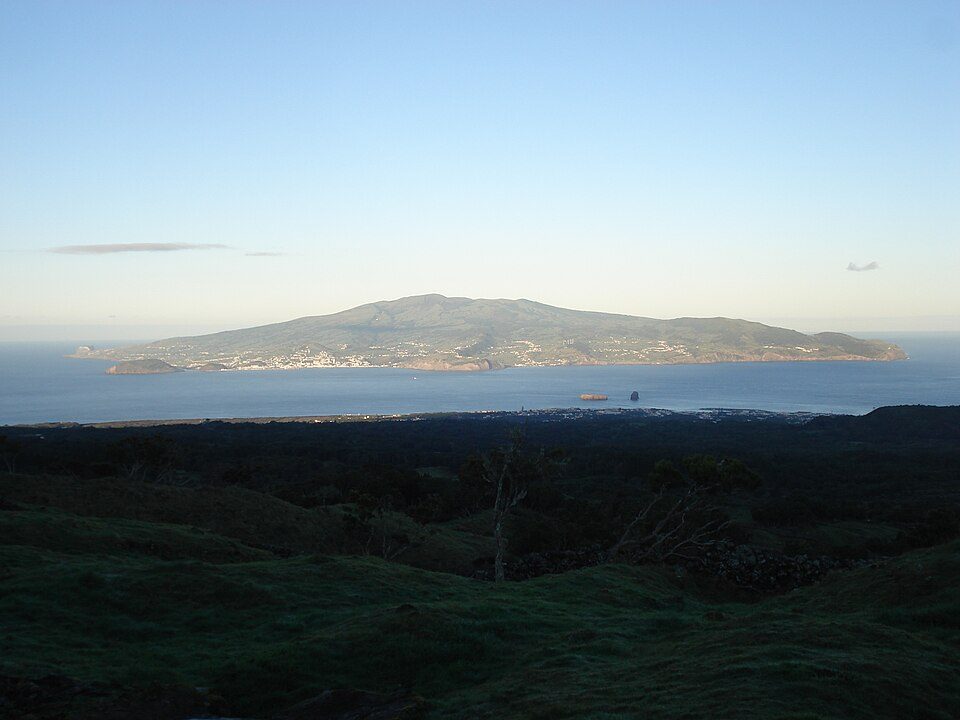
Faial, Portugal: Submarine Cable Landing Point
Faial is a Portuguese island situated in the Central Group of the Azores, an archipelago in the Atlantic Ocean. As a submarine cable landing point, Faial serves as a node within Portugal's intra-archipelago cable network, connecting the Azores islands to one another through dedicated fibre optic infrastructure. Two submarine cables come ashore at Faial, linking it to other points within Portugal's sovereign territory.
Both cables landing at Faial operate within an inter-island corridor rather than an intercontinental one, reflecting the geographic realities of the Azores archipelago. The Azores Fiber Optic System (AFOS) and the Flores-Corvo Cable System together position Faial as a connectivity hub for the western and central portions of the Azores island chain, enabling intra-Portuguese digital connectivity across open Atlantic waters.
Cables Landing at Faial, Portugal
The Azores Fiber Optic System (AFOS) is a 1,100-kilometre submarine cable that reached ready-for-service status in 1998. It connects multiple points within Portugal, linking islands across the Azores archipelago. As one of the earlier fibre optic systems to serve the region, AFOS established a foundational layer of inter-island connectivity for Faial and its neighbouring islands.
The Flores-Corvo Cable System spans 685 kilometres and entered service in 2014. Like AFOS, its endpoints are entirely within Portugal, specifically serving the westernmost islands of the Azores - Flores and Corvo - and routing through Faial. This cable extended modern fibre optic connectivity to the most remote islands of the Azorean chain, with Faial acting as an intermediate or terminal landing point in that system.
Regional Context
Within Portugal's submarine cable landscape - which spans 21 cables across 19 landing points - Faial ranks in the upper tier of mid-range landing points by cable count, placing it in the top 63% nationally. Mainland Portuguese landing points such as Carcavelos (8 cables), Sesimbra (5 cables), Sines (4 cables), and Funchal (4 cables) host more cables, while fellow Azorean landing points Ponta Delgada and São Miguel each host 3 cables. Faial's two cables reflect its role as a specialised intra-archipelago node rather than a gateway for long-haul international traffic.
Network Role
Faial functions as a two-cable landing point oriented entirely toward intra-Portuguese, inter-island connectivity. Both systems terminating here serve the Azores archipelago exclusively, enabling data exchange between islands separated by hundreds of kilometres of Atlantic Ocean. This makes Faial a distinct type of landing point within Portugal's cable geography - one focused on resilient local connectivity rather than participation in intercontinental cable corridors.
In the broader Portuguese submarine cable graph, Faial represents the class of island landing points that knit together a geographically dispersed sovereign territory. Its position as a landing point for both the AFOS system and the Flores-Corvo Cable System means it bridges connectivity between the central and western Azores, reinforcing the internal coherence of the archipelago's fibre optic network.
What next: Faial, Portugal in the global directory of cable landing points; see surrounding routes on the interactive submarine cable map or follow live network monitoring.
Other Landing Points in Portugal
FAQ
Landing Point
- CountryPT Portugal
- Coordinates38.5251°N 28.6476°W
- Connected Cables2
See Real Cable Routes
View actual submarine cable routing from Faial, Portugal - with backbone nodes, distance calculations, and latency estimates
Open Calculator →