Carcavelos, Portugal
Landing Point · PT Portugal
Connected Cables
| Cable | Status |
|---|---|
| 2Africa | Active |
| Africa Coast to Europe (ACE) | Active |
| BUGIO | Active |
| Columbus-III Azores-Portugal | Active |
| Continente-Madeira | Active |
| Medusa Submarine Cable System | Active |
| New CAM Ring | Active |
| Olisipo | Active |
Live Performance
RTT measurements to this landing point from 2026-03-02 through 2026-10-16 - live ICMP round-trip time via our monitoring probes. Recomputed daily.
Measurement sources
| Probe | Location | Samples | Avg |
|---|---|---|---|
| #65128 | control probe | 195 | 218.1 ms |
| own probe | Minsk BY | 136 | 89.5 ms |
| #61129 | control probe | 125 | 89.8 ms |
| #6427 own probe | Sydney AU | 124 | 266.6 ms |
| own probe | Odessa UA | 99 | 75.6 ms |
| own probe | Almaty KZ | 21 | 121.7 ms |
| own probe | Tbilisi GE | 20 | 210.8 ms |
| own probe | Jerusalem IL | 16 | 476.5 ms |
| own probe | Sevastopol UA | 15 | 436.4 ms |
| own probe | Moscow RU | 12 | 385.3 ms |
| #7062 own probe | Cape Town ZA | 10 | 172.0 ms |
| #6410 own probe | Sao Paulo BR | 9 | 205.5 ms |
| #6568 own probe | Singapore SG | 9 | 187.5 ms |
| own probe | Saint Petersburg RU | 9 | 77.8 ms |
| own probe | Rostov RU | 9 | 112.8 ms |
| own probe | Balancer IL | 9 | 90.8 ms |
| own probe | DVM IL | 9 | 705.0 ms |
| own probe | Ekaterinburg RU | 9 | 716.2 ms |
| own probe | Kyiv UA | 7 | 66.4 ms |
| #6487 | control probe | 5 | 174.0 ms |
About Carcavelos, Portugal
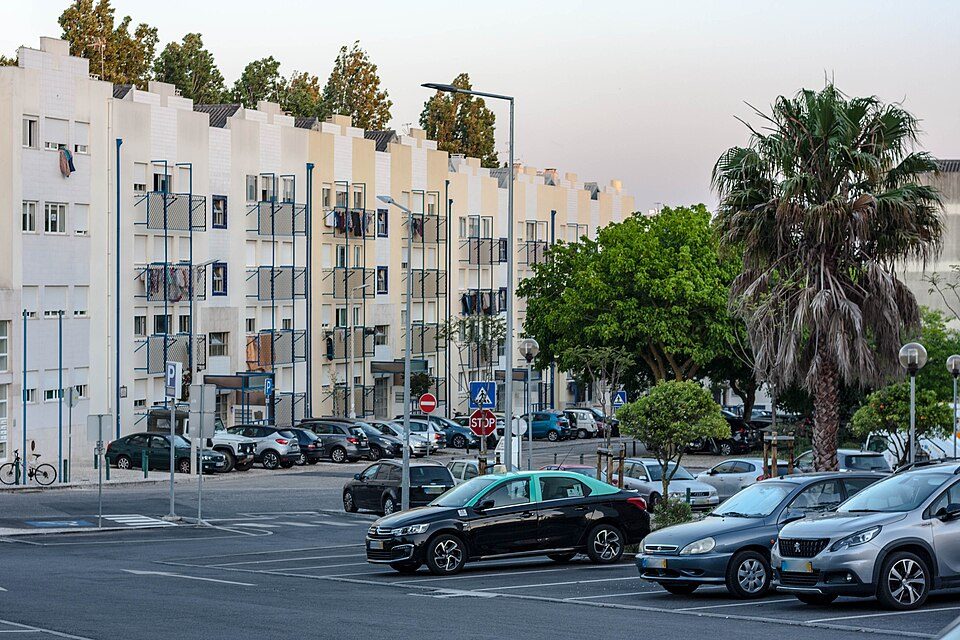
Carcavelos, Portugal: Submarine Cable Landing Point
Carcavelos is a coastal locality on the Portuguese Riviera, situated approximately 12 kilometres west of Lisbon within the municipality of Cascais. Its position on the Atlantic shore of mainland Portugal has made it one of the most significant submarine cable landing points in the country. Eight submarine cables come ashore at Carcavelos, making it the busiest landing point in Portugal by cable count and placing it well ahead of its nearest regional peers.
The cables landing at Carcavelos connect Portugal to a wide range of destinations, with a strong emphasis on the African continent. Systems such as 2Africa and the Africa Coast to Europe (ACE) cable together reach dozens of countries along the western and eastern African coastlines, as well as extending into the Gulf and the Horn of Africa. Beyond Africa-facing routes, Carcavelos also hosts domestic cables linking mainland Portugal to its Atlantic island territories of Madeira and the Azores, as well as the forthcoming Medusa system, which extends eastward into the Mediterranean basin.
This combination of intercontinental African routes, Mediterranean connectivity, and domestic inter-island links positions Carcavelos as a multi-directional hub on Portugal's submarine cable map.
Cables Landing at Carcavelos
2Africa is a 45,000 km cable with a ready-for-service (RFS) date of 2024. It connects Carcavelos to Angola, Bahrain, Comoros, Côte d'Ivoire, the Democratic Republic of Congo, and Djibouti, among its other landing points, tracing a route around the African continent and into the Middle East.
Africa Coast to Europe (ACE) spans 17,000 km and entered service in 2012. The cable links Carcavelos with Benin, Côte d'Ivoire, Equatorial Guinea, France, Gabon, and Gambia, running along the western coast of Africa and northward to Europe.
Medusa Submarine Cable System measures 8,760 km and is scheduled for an RFS date of 2026. It connects Carcavelos to Algeria, Cyprus, Egypt, France, Greece, and Italy, establishing a route through the Mediterranean from the Iberian Atlantic coast to the eastern Mediterranean.
New CAM Ring is a 3,812 km domestic cable with an RFS date of 2026, connecting multiple landing points within Portugal.
Continente-Madeira is a 1,179 km domestic cable that entered service in 2000, linking mainland Portugal to its Atlantic island region of Madeira.
Olisipo is a 110 km domestic cable scheduled for RFS in 2026, connecting points within Portugal.
BUGIO is a 73 km domestic cable, the earliest system recorded at this landing point, having entered service in 1996. It connects locations within Portugal.
Columbus-III Azores-Portugal entered service in 1999 and connects Carcavelos to other points within Portugal, forming part of the domestic Atlantic island cable network linking the Azores to the mainland.
Regional Context
Within Portugal, Carcavelos leads all 19 landing points with eight cables, ahead of Sesimbra with five, and Funchal, Sines, Ponta Delgada, São Miguel, and Seixal each hosting between three and four cables. Portugal's submarine cable infrastructure spans 21 cables across its landing points, with Carcavelos hosting a disproportionately large share of that total. Its combination of intercontinental and domestic systems distinguishes it from other Portuguese landing points, which tend to specialise in either Atlantic island connectivity or a narrower set of international routes.
Network Role
Carcavelos functions as a multi-cable hub rather than a single-cable terminus, serving simultaneously as a gateway to sub-Saharan and East Africa, a node on the emerging Mediterranean ring via Medusa, and an anchor for domestic cables reaching Madeira and the Azores. The landing point hosts cables spanning four decades of deployment, from BUGIO in 1996 through to systems scheduled for 2026, reflecting sustained and expanding investment in this location. The African-facing routes through 2Africa and ACE together touch an extensive range of West and East African nations, while the Medusa system adds a Mediterranean dimension that extends Carcavelos's reach toward the Middle East and southern Europe.
Within the regional submarine cable graph, Carcavelos represents Portugal's most connected single landing point, consolidating intercontinental African, Mediterranean, and domestic Atlantic island traffic at one site on the Lisbon coast.
What next: Carcavelos, Portugal in the global directory of cable landing points; see surrounding routes on the interactive submarine cable map or follow live network monitoring.
Incident history
Significant incidents on cables landing here, each with its own report.
- Medusa Submarine Cable System: latency up to 3.1× normal, 11 Oct 2026 (resolved)
- Medusa Submarine Cable System: latency up to 5.1× normal, 11 Oct 2026 (resolved)
Other Landing Points in Portugal
FAQ
Landing Point
- CountryPT Portugal
- Coordinates38.6902°N 9.3316°W
- Connected Cables8
See Real Cable Routes
View actual submarine cable routing from Carcavelos, Portugal - with backbone nodes, distance calculations, and latency estimates
Open Calculator →