Dili, Timor-Leste
Landing Point · TL Timor-Leste
Connected Cables
| Cable | Status |
|---|---|
| Asia Connect Cable-1 (ACC-1) | Planned |
| Hawaiki Nui 1 | Planned |
Live Performance
RTT measurements to this landing point from 2026-07-13 through 2026-10-03 - live ICMP round-trip time via our monitoring probes. Recomputed daily. ✓ No anomalies detected in the monitored period.
Measurement sources
| Probe | Location | Samples | Avg |
|---|---|---|---|
| #6427 own probe | Sydney AU | 19 | 174.3 ms |
| #6410 own probe | Sao Paulo BR | 18 | 357.2 ms |
| #6487 | control probe | 14 | 62.6 ms |
| own probe | Almaty KZ | 11 | 361.5 ms |
| own probe | Minsk BY | 10 | 277.9 ms |
| #26109 | control probe | 8 | 156.4 ms |
| #51835 | control probe | 8 | 158.8 ms |
| #62242 | control probe | 8 | 146.6 ms |
| own probe | Tbilisi GE | 4 | 327.4 ms |
About Dili, Timor-Leste
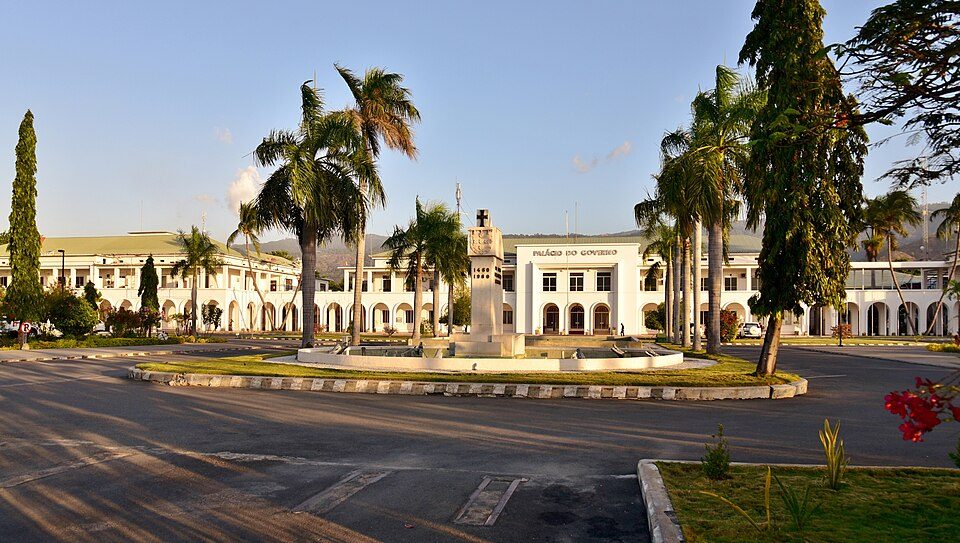
Dili, Timor-Leste: Submarine Cable Landing Point
Dili is the capital and largest city of Timor-Leste, situated on the northern coast of the island of Timor. As the country's sole submarine cable landing point, Dili serves as the single gateway through which Timor-Leste connects to the international submarine cable network. Two submarine cables are scheduled to land at Dili: the Asia Connect Cable-1 (ACC-1) and Hawaiki Nui 1, both of which are currently in draft status with projected ready-for-service dates in 2027 and 2028 respectively.
Together, these two cables position Dili within a broad regional corridor spanning Southeast Asia, the Pacific, and beyond. ACC-1 extends Dili's connectivity toward major hubs including Singapore, Australia, and the United States, while Hawaiki Nui 1 links the city into a regional Pacific network encompassing Australia, Indonesia, Papua New Guinea, the Solomon Islands, and Singapore. The combination of an intercontinental cable and a regional Pacific cable gives Dili access to two distinct but complementary connectivity corridors.
Cables Landing at Dili, Timor-Leste
Asia Connect Cable-1 (ACC-1) is a submarine cable system with a total length of approximately 19,000 km, with a draft ready-for-service date of 2028. In addition to Dili, ACC-1 lands in Australia, Guam, Indonesia, the Philippines, Singapore, and the United States. The cable spans an intercontinental corridor connecting Southeast Asia and the Pacific to North America.
Hawaiki Nui 1 is a submarine cable system spanning approximately 10,000 km, with a draft ready-for-service date of 2027. Beyond Dili, Hawaiki Nui 1 lands in Australia, Indonesia, Papua New Guinea, Singapore, and the Solomon Islands. The cable establishes a regional Pacific corridor linking Timor-Leste with Southeast Asian hubs and island nations of the southwestern Pacific.
Regional Context
Dili is the only submarine cable landing point in Timor-Leste, meaning it concentrates all of the country's submarine cable infrastructure at a single location. The two cables scheduled to land here represent the entirety of Timor-Leste's international submarine cable connectivity, with the first of the two systems expected to become ready for service in 2027.
Network Role
Dili functions as a dual-cable terminus for Timor-Leste, hosting both of the country's planned international submarine cable connections. ACC-1 provides an intercontinental link reaching as far as the United States via Guam, while Hawaiki Nui 1 delivers regional connectivity across the southwestern Pacific and into Southeast Asia. The two systems together serve distinct but complementary routing functions, one oriented toward trans-Pacific long-haul traffic and the other toward intra-regional Pacific connectivity.
As the sole landing point in Timor-Leste, Dili occupies a position of complete national concentration within the country's submarine cable graph. Its inclusion on two separate cable systems with different geographic footprints means that, once both cables reach service, the city will offer at least a degree of route diversity for international connectivity. This makes Dili a notable node within the broader Southeast Asia and Pacific submarine cable network.
What next: Dili, Timor-Leste in the global directory of cable landing points; see surrounding routes on the interactive submarine cable map or follow live network monitoring.
Landing Point
- CountryTL Timor-Leste
- Coordinates8.5707°S 125.5807°E
- Connected Cables2
See Real Cable Routes
View actual submarine cable routing from Dili, Timor-Leste - with backbone nodes, distance calculations, and latency estimates
Open Calculator →