Caticlan, Philippines
Landing Point · PH Philippines
Connected Cables
| Cable | Status |
|---|---|
| Boracay-Palawan Submarine Cable System (BPSCS) | Active |
| Philippine Domestic Submarine Cable Network (PDSCN) | Active |
Live Performance
RTT measurements to this landing point from 2026-05-01 through 2026-09-01 - live ICMP round-trip time via our monitoring probes. Recomputed daily. ✓ No anomalies detected in the monitored period.
Measurement sources
| Probe | Location | Samples | Avg |
|---|---|---|---|
| own probe | Almaty KZ | 9 | 308.2 ms |
| #6427 own probe | Sydney AU | 7 | 139.6 ms |
| #6410 own probe | Sao Paulo BR | 6 | 332.7 ms |
| #6487 | control probe | 6 | 47.4 ms |
| #7062 own probe | Cape Town ZA | 6 | 302.7 ms |
| own probe | Tbilisi GE | 5 | 285.1 ms |
| #53161 | control probe | 4 | 45.1 ms |
| #64843 | control probe | 4 | 37.4 ms |
| #64896 | control probe | 4 | 62.7 ms |
| own probe | Minsk BY | 3 | 251.2 ms |
| own probe | Jerusalem IL | 3 | 309.4 ms |
| own probe | Moscow RU | 3 | 272.7 ms |
| own probe | Sevastopol UA | 2 | 301.6 ms |
About Caticlan, Philippines
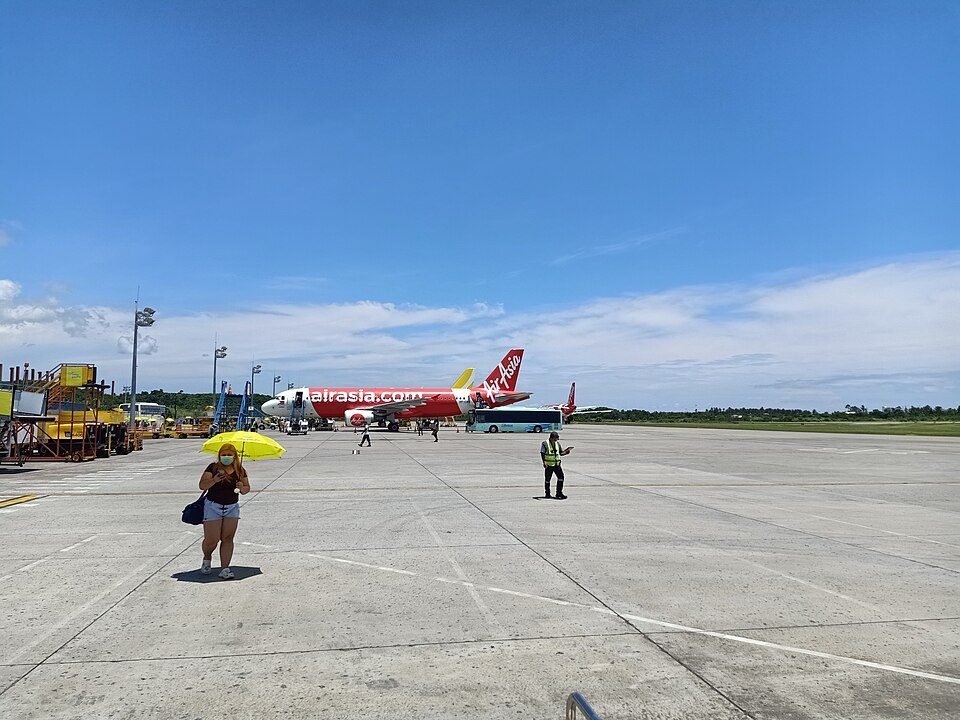
Caticlan, Philippines: Submarine Cable Landing Point
Caticlan is a municipality in the province of Aklan on the island of Panay in the Philippines. As a coastal settlement positioned along the Sibuyan Sea, it serves as a landing point for two submarine cables that together form part of the domestic connectivity fabric of the Philippine archipelago. Both cables landing at Caticlan connect exclusively to other points within the Philippines, establishing this location as a node within the country's internal submarine cable network rather than a gateway to international routes.
The two cables landing here - the Philippine Domestic Submarine Cable Network (PDSCN) and the Boracay-Palawan Submarine Cable System (BPSCS) - serve the inter-island corridor connecting Panay and its surrounding region to other Philippine islands, including Palawan to the southwest. Together they reflect the ongoing national effort to extend reliable undersea connectivity across the country's widely dispersed island geography.
Cables Landing at Caticlan
The Philippine Domestic Submarine Cable Network (PDSCN) is a domestic submarine cable system spanning 2,500 kilometres, with a ready-for-service date in 2023. The cable connects multiple landing points entirely within the Philippines, and Caticlan is one of its endpoints along this inter-island network.
The Boracay-Palawan Submarine Cable System (BPSCS) is a shorter domestic cable measuring 332 kilometres, with a ready-for-service date of 2013. Like the PDSCN, it connects landing points exclusively within the Philippines, linking Caticlan to other domestic destinations including those in the Palawan corridor. Its earlier completion date makes it the longer-established of the two cables at this landing point.
Regional Context
Within the Philippines, Caticlan hosts two submarine cables, placing it among the lower-cable-count landing points in a national network that spans 71 landing points across 26 cables. Landing points such as Batangas, Cagayan de Oro, Davao, and Taytay each host four cables, while Baler and Boracay each host three. Caticlan ranks in the top 82 percent of Philippine landing points by cable count, reflecting a mid-tier position in the domestic submarine cable landscape.
Network Role
Caticlan functions as a domestic inter-island cable hub, with both of its cables operating entirely within the Philippines. The BPSCS, in service since 2013, established the location's role in connecting the Panay region to the Palawan corridor, while the more recently completed PDSCN extends that domestic connectivity across a broader 2,500-kilometre network. As a two-cable landing point, Caticlan is a focused terminus rather than a large multi-cable exchange.
Within the wider Philippine submarine cable graph, Caticlan contributes to the domestic inter-island layer that complements the country's international cable landings concentrated at higher-count nodes. Its presence in the network helps bridge the connectivity gap between the central Visayas region and more remote island provinces, reinforcing the distributed architecture of the Philippines' domestic undersea infrastructure.
What next: Caticlan, Philippines in the global directory of cable landing points; see surrounding routes on the interactive submarine cable map or follow live network monitoring.
Other Landing Points in Philippines
Landing Point
- CountryPH Philippines
- Coordinates11.9309°N 121.9508°E
- Connected Cables2
See Real Cable Routes
View actual submarine cable routing from Caticlan, Philippines - with backbone nodes, distance calculations, and latency estimates
Open Calculator →