Blackwaterfoot, United Kingdom
Landing Point · GB United Kingdom
Connected Cables
| Cable | Status |
|---|---|
| BT Highlands and Islands Submarine Cable System | Active |
Live Performance
RTT measurements to this landing point from 2026-04-13 through 2026-06-01 - live ICMP round-trip time via our monitoring probes. Recomputed daily. ✓ No anomalies detected in the monitored period.
Measurement sources
| Probe | Location | Samples | Avg |
|---|---|---|---|
| own probe | Minsk BY | 3 | 39.7 ms |
| own probe | Sevastopol UA | 3 | 83.4 ms |
| own probe | Almaty KZ | 2 | 99.2 ms |
| own probe | Tbilisi GE | 2 | 64.0 ms |
| own probe | Jerusalem IL | 2 | 76.0 ms |
| own probe | Moscow RU | 2 | 47.2 ms |
| #6427 own probe | Sydney AU | 1 | 255.6 ms |
| #6487 | control probe | 1 | 159.1 ms |
About Blackwaterfoot, United Kingdom
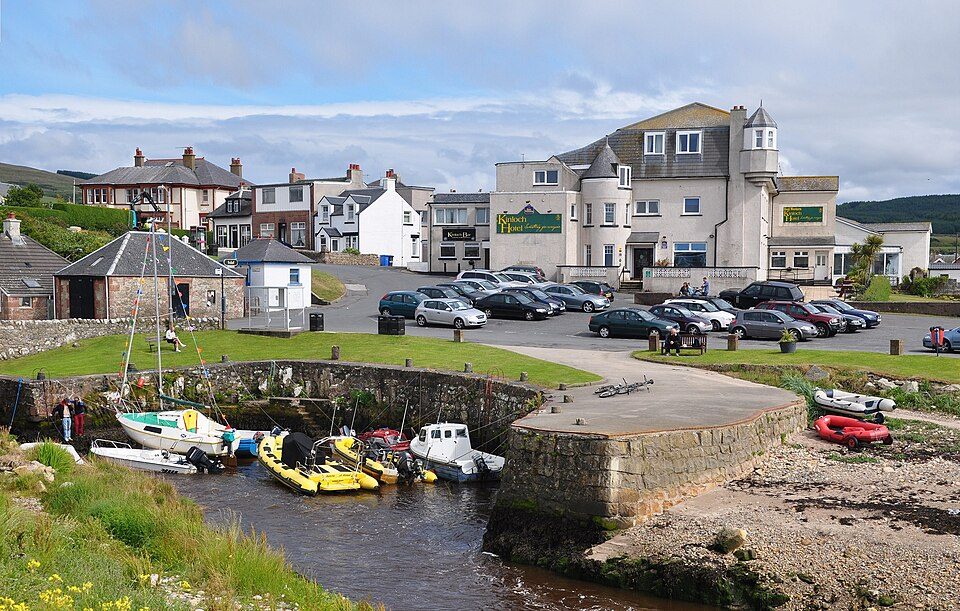
Blackwaterfoot, United Kingdom: Submarine Cable Landing Point
Blackwaterfoot is a village on the Isle of Arran, situated in the Firth of Clyde off the west coast of Scotland. As an island community within the United Kingdom, its connection to submarine cable infrastructure reflects the broader challenge of providing reliable connectivity to geographically dispersed coastal and island settlements. One submarine cable lands at Blackwaterfoot, linking it into the wider network of subsea communications that serves the United Kingdom's highlands and islands region.
The cable landing here is the BT Highlands and Islands Submarine Cable System, a domestically focused system that connects various points within the United Kingdom. Rather than enabling intercontinental reach, this cable serves an intra-national corridor, providing connectivity between island and mainland communities across Scotland's coastal geography.
Cables Landing at Blackwaterfoot
The BT Highlands and Islands Submarine Cable System is a 402-kilometre submarine cable that reached ready-for-service status in 2014. All endpoints on this system are located within the United Kingdom, confirming its role as a domestic connectivity solution. The cable links multiple landing points across the highlands and islands of Scotland, with Blackwaterfoot on the Isle of Arran forming one of its termination points. The system was designated as a draft-status cable at the time of recording.
Regional Context
Within the United Kingdom, which hosts 66 submarine cables across 125 landing points, Blackwaterfoot is among the smaller landing locations by cable count, serving a single cable and ranking within the top 88 percent of domestic landing points. By comparison, other United Kingdom landing points such as Bude host eight cables and Lowestoft six, reflecting the concentration of international traffic at a small number of major coastal sites. Blackwaterfoot's single-cable profile is representative of the many specialised, domestically oriented landing points that form part of the United Kingdom's broader subsea network.
Network Role
Blackwaterfoot functions as a single-cable terminus within the BT Highlands and Islands Submarine Cable System, connecting the Isle of Arran to the wider intra-UK submarine network. Its role is specifically regional, supporting connectivity for island communities rather than serving as a node in any international submarine cable corridor. The 402-kilometre cable it hosts is notably shorter than the United Kingdom average cable length of 1,615 kilometres, underscoring its purpose as a localised link rather than a long-haul route.
In the broader submarine cable graph of the United Kingdom, Blackwaterfoot represents the category of landing point that extends network reach to geographically isolated communities, ensuring that smaller island settlements on the Scottish coast maintain subsea-supported connectivity alongside the major international gateways that dominate the country's cable map.
What next: Blackwaterfoot, United Kingdom in the global directory of cable landing points; see surrounding routes on the interactive submarine cable map or follow live network monitoring.
Other Landing Points in United Kingdom
Landing Point
- CountryGB United Kingdom
- Coordinates55.5020°N 5.3321°W
- Connected Cables1
See Real Cable Routes
View actual submarine cable routing from Blackwaterfoot, United Kingdom - with backbone nodes, distance calculations, and latency estimates
Open Calculator →