Baby Beach, Aruba
Landing Point · AW Aruba
Connected Cables
| Cable | Status |
|---|---|
| Alonso de Ojeda | Active |
| CELIA | Planned |
Live Performance
RTT measurements to this landing point from 2026-07-02 through 2026-10-01 - live ICMP round-trip time via our monitoring probes. Recomputed daily. ✓ No anomalies detected in the monitored period.
Measurement sources
| Probe | Location | Samples | Avg |
|---|---|---|---|
| #6410 own probe | Sao Paulo BR | 2 | 156.1 ms |
| #6427 own probe | Sydney AU | 2 | 228.2 ms |
| #6487 | control probe | 2 | 272.0 ms |
| #28046 | control probe | 2 | 67.8 ms |
| #64962 | control probe | 2 | 92.7 ms |
| own probe | Minsk BY | 2 | 306.2 ms |
| own probe | Saint Petersburg RU | 2 | 303.2 ms |
| own probe | Kyiv UA | 2 | 196.1 ms |
About Baby Beach, Aruba
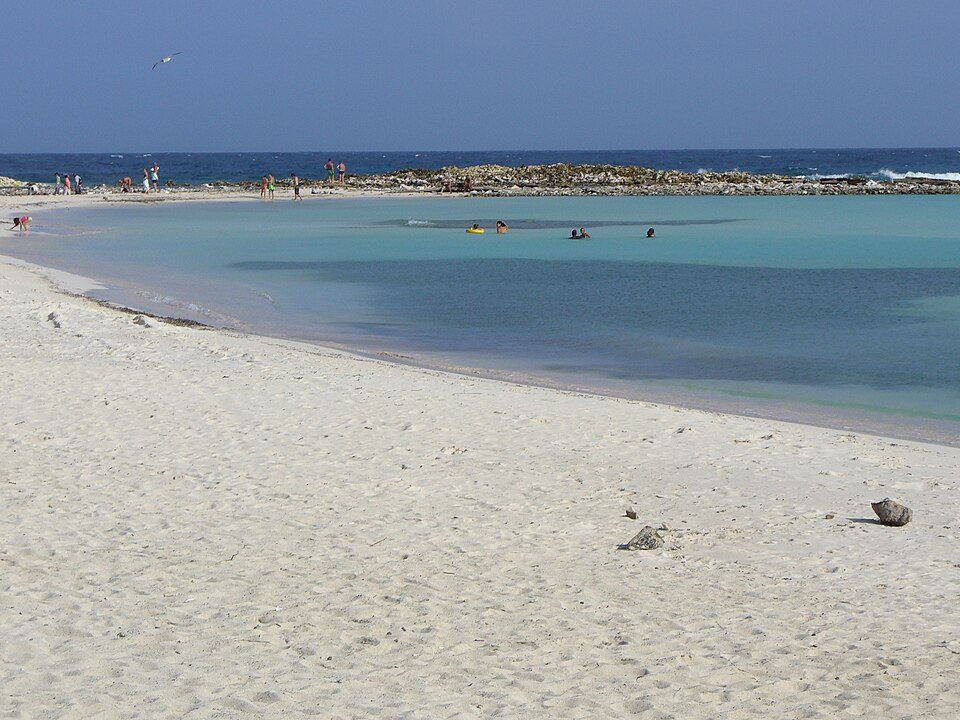
Baby Beach, Aruba: Submarine Cable Landing Point
Baby Beach, locally known as Klein Lagoen, is a sheltered lagoon on the southeastern end of Aruba, a Caribbean island territory. Despite its reputation as a tranquil recreational site near the village of Seroe Colorado, Baby Beach serves as one of Aruba's two submarine cable landing points. Two submarine cables make landfall here, connecting the island to destinations across the Caribbean and to the United States, enabling both regional inter-island connectivity and broader intercontinental links.
The two cables landing at Baby Beach span very different eras and scales. The shorter of the two, Alonso de Ojeda, provides a direct link to the neighboring island of Curaçao, while the longer CELIA cable, currently in draft status for readiness in 2027, will extend Aruba's reach northward through the Caribbean arc to Martinique, Saint Barthélemy, Antigua and Barbuda, Sint Eustatius and Saba, and onward to the United States. Together, these two cables make Baby Beach the more internationally connected of Aruba's two landing points.
Cables Landing at Baby Beach, Aruba
Alonso de Ojeda is a 122-kilometer submarine cable that became ready for service in 1999, making it the first submarine cable to land in Aruba. It connects Baby Beach directly to Curaçao, providing a short inter-island link between two neighboring Dutch Caribbean territories. Its limited length reflects the short maritime distance separating the two islands.
CELIA is a 3,700-kilometer submarine cable currently in draft status, with a projected readiness for service date of 2027. When operational, it will connect Baby Beach, Aruba to Antigua and Barbuda, Curaçao, Martinique, Saint Barthélemy, Sint Eustatius and Saba, and the United States. This cable will significantly expand Baby Beach's reach, integrating Aruba into a broader Caribbean corridor that extends to the North American mainland.
Regional Context
Aruba's submarine cable infrastructure is distributed across two landing points. Baby Beach hosts two of the country's three submarine cables, while the other landing point, Hudishibana, hosts one. This makes Baby Beach the more active of the two sites in terms of cable count, and, once CELIA becomes operational, in terms of geographic reach as well.
Network Role
Baby Beach functions as a multi-cable landing point, anchoring both a short inter-island connection to Curaçao via Alonso de Ojeda and, prospectively from 2027, a long-distance corridor stretching through multiple Caribbean island nations to the United States via CELIA. The existing Alonso de Ojeda cable has served inter-island connectivity since 1999, and the addition of CELIA will substantially extend the number of territories reachable directly from this single landing point.
In the broader Caribbean submarine cable graph, Baby Beach's combination of a legacy short-haul link and an incoming long-haul multi-territory cable positions it as the primary international gateway within Aruba's modest but growing cable infrastructure.
What next: Baby Beach, Aruba in the global directory of cable landing points; see surrounding routes on the interactive submarine cable map or follow live network monitoring.
Other Landing Points in Aruba
Landing Point
- CountryAW Aruba
- Coordinates12.4141°N 69.8787°W
- Connected Cables2
See Real Cable Routes
View actual submarine cable routing from Baby Beach, Aruba - with backbone nodes, distance calculations, and latency estimates
Open Calculator →