Atafu, Tokelau
Landing Point · TK Tokelau
Connected Cables
| Cable | Status |
|---|---|
| Tokelau Submarine Cable | Active |
Live Performance
RTT measurements to this landing point from 2026-07-15 through 2026-07-15 - live ICMP round-trip time via our monitoring probes. Recomputed daily. ✓ No anomalies detected in the monitored period.
Measurement sources
| Probe | Location | Samples | Avg |
|---|---|---|---|
| #6410 own probe | Sao Paulo BR | 2 | 381.2 ms |
| #6427 own probe | Sydney AU | 2 | 56.7 ms |
| #6487 | control probe | 2 | 149.5 ms |
| own probe | Almaty KZ | 2 | 407.5 ms |
| own probe | Jerusalem IL | 2 | 378.3 ms |
| own probe | Balancer IL | 2 | 367.2 ms |
About Atafu, Tokelau
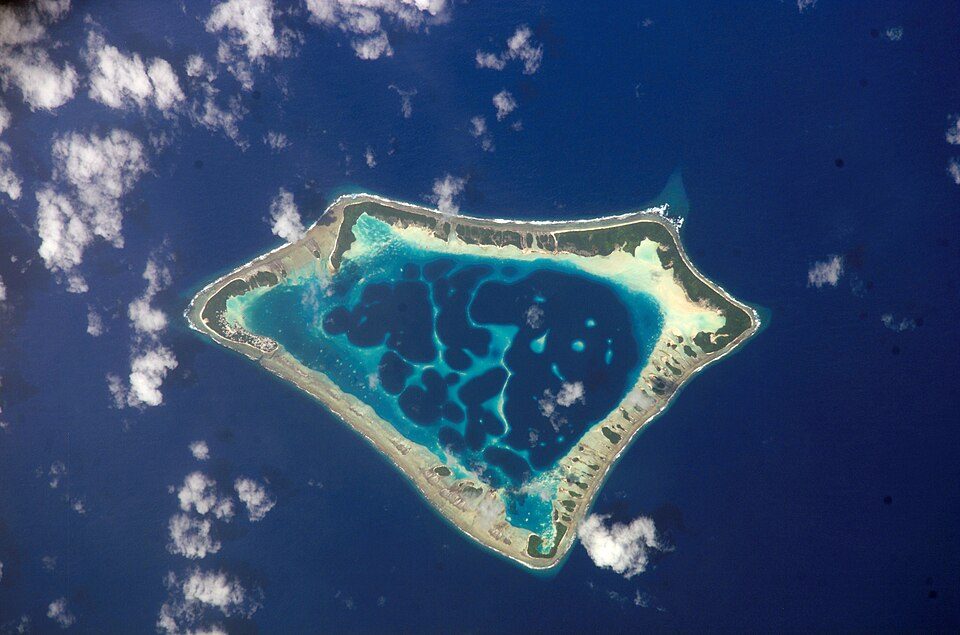
Atafu, Tokelau: Submarine Cable Landing Point
Atafu is a coral atoll in the south Pacific Ocean, forming the northernmost of the three atolls that constitute Tokelau, a territory of New Zealand. Situated approximately 500 kilometres north of Samoa and 800 kilometres south of the equator, Atafu is a remote island group with a land area of just 2.5 square kilometres spread across 52 coral islets surrounding a central lagoon. Despite its small size and geographic isolation, Atafu serves as a submarine cable landing point, connecting the atoll to Tokelau's emerging subsea communications network.
One submarine cable lands at Atafu: the Tokelau Submarine Cable. This system links Atafu to the broader intra-Tokelau cable network, enabling connectivity across an archipelago whose atolls are separated by open ocean. The cable represents a significant step in providing submarine-based communications infrastructure to one of the world's most isolated and sparsely populated territories.
Cables Landing at Atafu, Tokelau
The Tokelau Submarine Cable is approximately 250 kilometres in length and reached ready-for-service status in 2023, though it carries draft status. The cable connects landing points within Tokelau itself, making it an intra-territorial system rather than an intercontinental link. By landing at Atafu alongside other Tokelau atolls, this cable forms part of a network designed to bridge the significant distances between Tokelau's three island groups across the south Pacific.
Regional Context
Within Tokelau, three landing points share the territory's submarine cable infrastructure. Nukunonu hosts two cables, making it the most connected landing point in the territory. Atafu and Fakaofo each host one cable, placing them at a comparable level of connectivity. Atafu thus sits within the middle tier of Tokelau's landing points by cable count, ranking in the top 67 percent of the country's three cable landing locations.
Network Role
Atafu functions as a single-cable terminus within the Tokelau Submarine Cable system. Its role is principally intra-territorial: the cable landing here does not connect Tokelau to a foreign country but instead forms part of the network linking Tokelau's own atolls to one another. This reflects the practical reality of Tokelau's geography, where each atoll is physically separated and submarine cable infrastructure provides the means to bridge those gaps.
In the regional submarine cable graph, Atafu's position as one of three landing points in Tokelau illustrates how even very small and remote island territories are increasingly served by dedicated subsea cable systems. The arrival of the Tokelau Submarine Cable at Atafu means the northernmost atoll of Tokelau is integrated into the same domestic cable network that connects Nukunonu and Fakaofo, reducing the communications isolation that has historically characterised life on this small Pacific atoll.
What next: Atafu, Tokelau in the global directory of cable landing points; see surrounding routes on the interactive submarine cable map or follow live network monitoring.
Other Landing Points in Tokelau
Landing Point
- CountryTK Tokelau
- Coordinates8.5591°S 172.5109°W
- Connected Cables1
See Real Cable Routes
View actual submarine cable routing from Atafu, Tokelau - with backbone nodes, distance calculations, and latency estimates
Open Calculator →