Abidjan, Côte d'Ivoire
Landing Point · CI Côte d'Ivoire
Connected Cables
| Cable | Status |
|---|---|
| 2Africa | Active |
| Africa Coast to Europe (ACE) | Active |
| MainOne | Active |
| Maroc Telecom West Africa | Active |
| SAT-3/WASC | Active |
| West Africa Cable System (WACS) | Active |
Live Performance
RTT measurements to this landing point from 2026-03-07 through 2026-09-27 - live ICMP round-trip time via our monitoring probes. Recomputed daily. ✓ No anomalies detected in the monitored period.
Measurement sources
| Probe | Location | Samples | Avg |
|---|---|---|---|
| #14843 | control probe | 31 | 342.2 ms |
| #6427 own probe | Sydney AU | 14 | 357.4 ms |
| #7062 own probe | Cape Town ZA | 14 | 117.7 ms |
| own probe | Jerusalem IL | 13 | 182.2 ms |
| own probe | Almaty KZ | 8 | 259.5 ms |
| own probe | Minsk BY | 7 | 243.1 ms |
| own probe | Tbilisi GE | 7 | 197.5 ms |
| own probe | Balancer IL | 6 | 175.7 ms |
| #6487 | control probe | 3 | 251.2 ms |
| #61881 | control probe | 3 | 182.9 ms |
| own probe | Moscow RU | 3 | 163.6 ms |
| #6410 own probe | Sao Paulo BR | 2 | 293.1 ms |
| #60525 | control probe | 2 | 78.4 ms |
| own probe | Sevastopol UA | 2 | 206.5 ms |
| #65844 | control probe | 1 | 136.5 ms |
| own probe | Saint Petersburg RU | 1 | 158.3 ms |
About Abidjan, Côte d'Ivoire
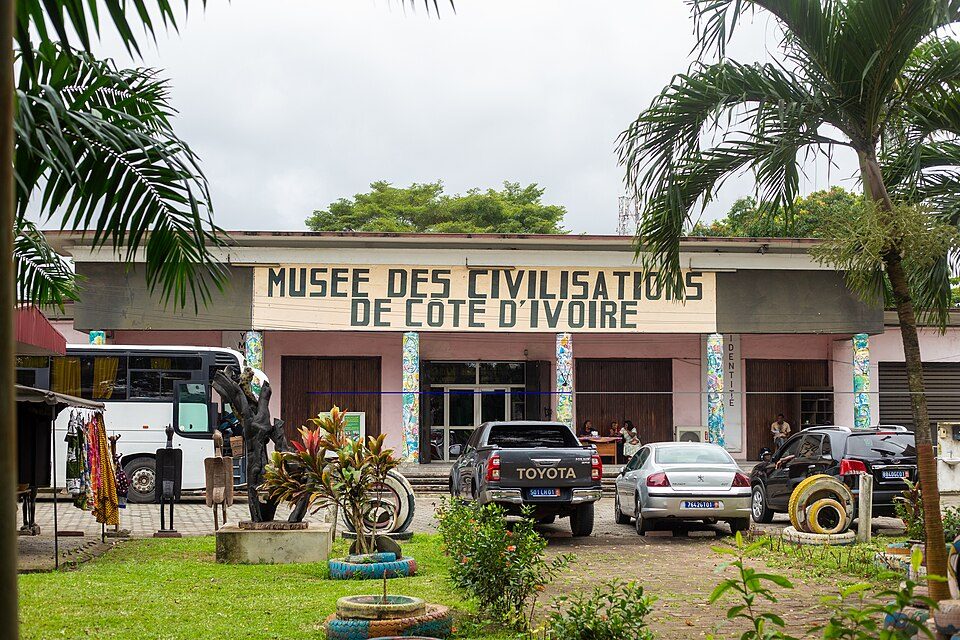
Abidjan, Côte d'Ivoire is a submarine cable landing point in Côte d'Ivoire (coordinates 5.3235°, -4.0262°). It serves 6 submarine cable systems, making it a significant node in Côte d'Ivoire's international connectivity infrastructure.
Abidjan is the largest city and the former capital of Ivory Coast. As of the 2021 census, Abidjan's population was 6.3 million, which is 21.5 percent of the overall population of the country, making it the sixth most populous city proper in Africa, after Lagos, Cairo, Kinshasa, Dar es Salaam, and Johannesburg. A cultural crossroads of West Africa, Abidjan is characterised by a high level of industrialisation and urbanisation. It is the most populous French-speaking city in West Africa. Wikipedia
Connected submarine cables
| Cable | RFS | Length | Owners |
|---|---|---|---|
| 2Africa | 2024 | 45,000 km | Bayobab, China Mobile, Meta, … |
| Maroc Telecom West Africa | 2021 | 8,600 km | Maroc Telecom |
| Africa Coast to Europe (ACE) | 2012 | 17,000 km | Bayobab, Cable Consortium of Liberia, Canalink, … |
| West Africa Cable System (WACS) | 2012 | 14,530 km | Altice Portugal, Angola Cables, Bayobab, … |
| MainOne | 2010 | 7,000 km | MainOne - An Equinix Company |
| SAT-3/WASC | 2002 | 14,350 km | AT&T, Altice Portugal, Angola Telecom, … |
Operators landing at Abidjan, Côte d'Ivoire
Cables landing at Abidjan, Côte d'Ivoire are operated by 66 distinct consortium partners and carriers, including AT&T, Altice Portugal, Angola Cables, Angola Telecom, BICS, BT, Bayobab, Broadband Infraco, Cable Consortium of Liberia, Camtel, and 56 others. Each cable is typically jointly owned by a consortium of tier-one carriers and hyperscale operators who share construction costs and capacity; the operator mix reflects both regional incumbents and global players with interest in the routes served by this landing point.
Connectivity profile
From Abidjan, Côte d'Ivoire, international traffic can reach 47 countries through 6 cable systems. Destinations include Angola, Bahrain, Benin, Cameroon, Cape Verde, Comoros, Dem. Rep., Djibouti and 39 more. With multiple redundant paths, traffic at this landing point can reroute through alternative cables if any single system experiences an outage.
Monitoring status
GeoCables recorded 2 monitoring events on cables serving Abidjan, Côte d'Ivoire in the past 90 days. Our monitoring network continuously samples latency from external probes to targets reachable via these cables.
About the cables
- 2Africa (2024) - 2Africa is a major intercontinental submarine cable system spanning 34 countries across West Africa, Middle East, Southern Africa. With 50 landing points - including Abidjan, Abu Dhabi, Accra, Al Faw, Al Khobar, and 45 more - it forms one of the backbone links carrying international internet traffic between continents. Read more →
- Maroc Telecom West Africa (2021) - Maroc Telecom West Africa is an intercontinental submarine cable system connecting West Africa and North Africa, with 6 landing points across 5 countries including Abidjan, Côte d'Ivoire, Casablanca, Morocco, Cotonou, Benin, Dakhla, Morocco and others. The cable provides cross-continental connectivity, offering an important route for data traffic between West Africa and North Africa. Read more →
- Africa Coast to Europe (ACE) (2012) - Africa Coast to Europe (ACE) is a major intercontinental submarine cable system spanning 18 countries across West Africa, Europe, Southern Africa. With 18 landing points - including Abidjan, Accra, Banjul, Bata, Carcavelos, and 13 more - it forms one of the backbone links carrying international internet traffic between continents. Read more →
- West Africa Cable System (WACS) (2012) - West Africa Cable System (WACS) is a major intercontinental submarine cable system spanning 13 countries across West Africa, Europe, Southern Africa. With 13 landing points - including Abidjan, Accra, El Goro, Lagos, Limbe, and 8 more - it forms one of the backbone links carrying international internet traffic between continents. Read more →
- MainOne (2010) - MainOne is a cross-regional submarine cable connecting Côte d'Ivoire, Ghana, Senegal, Nigeria, Portugal. Its 5 landing points at Abidjan, Accra, Dakar, Lagos, Seixal bridge the networks of West Africa, Europe, providing an important path for international data traffic. Read more →
- SAT-3/WASC (2002) - SAT-3/WASC is an intercontinental submarine cable system connecting West Africa and Europe and Southern Africa, with 12 landing points across 11 countries including Abidjan, Côte d'Ivoire, Accra, Ghana, Alta Vista, Canary Islands, Spain, Cacuaco, Angola and others. Read more →
What next: Abidjan, Côte d'Ivoire in the global directory of cable landing points; see surrounding routes on the interactive submarine cable map or follow live network monitoring.
FAQ
Landing Point
- CountryCI Côte d'Ivoire
- Coordinates5.3235°N 4.0262°W
- Connected Cables6
See Real Cable Routes
View actual submarine cable routing from Abidjan, Côte d'Ivoire - with backbone nodes, distance calculations, and latency estimates
Open Calculator →