Tiksi, Russia
Landing Point · RU Russia
Connected Cables
| Cable | Status |
|---|---|
| Polar Express | Active |
Live Performance
RTT measurements to this landing point from 2026-03-08 through 2026-10-10 - live ICMP round-trip time via our monitoring probes. Recomputed daily. ✓ No anomalies detected in the monitored period.
Measurement sources
| Probe | Location | Samples | Avg |
|---|---|---|---|
| own probe | Almaty KZ | 8 | 52.3 ms |
| #6410 own probe | Sao Paulo BR | 6 | 283.7 ms |
| #7062 own probe | Cape Town ZA | 6 | 227.0 ms |
| own probe | Minsk BY | 5 | 11.6 ms |
| own probe | Moscow RU | 5 | 1.6 ms |
| own probe | Saint Petersburg RU | 4 | 28.4 ms |
| own probe | Tbilisi GE | 2 | 119.4 ms |
| own probe | Jerusalem IL | 1 | 139.4 ms |
| own probe | Ekaterinburg RU | 1 | 1.4 ms |
About Tiksi, Russia
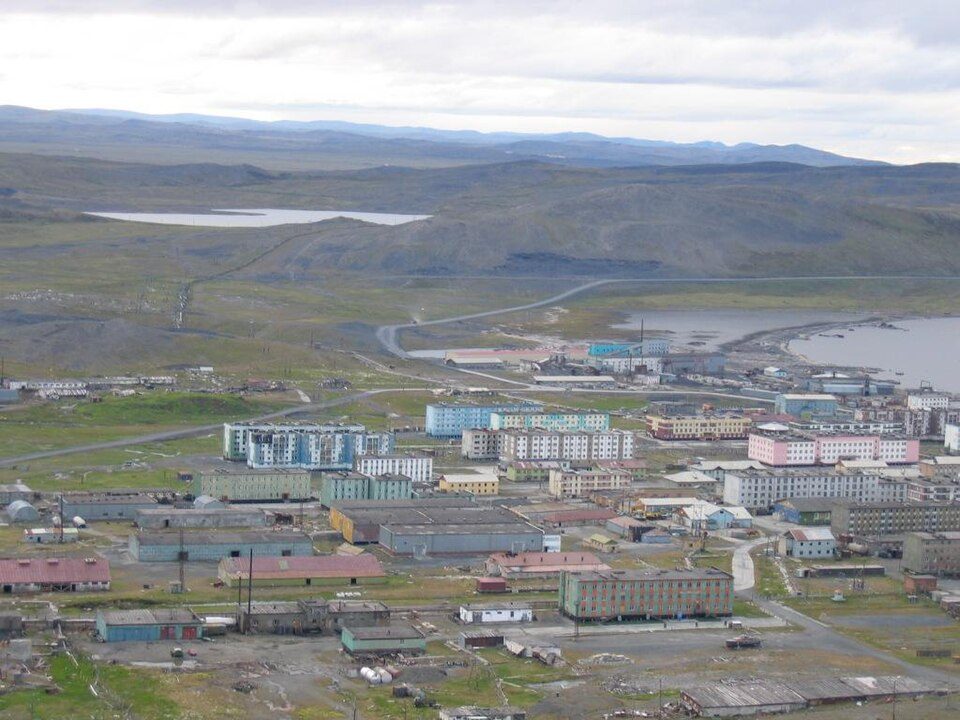
Tiksi, Russia: Submarine Cable Landing Point
Tiksi is an urban locality and the administrative center of Bulunsky District in the Sakha Republic, Russia. It is situated on the shore of the Buor-Khaya Gulf of the Laptev Sea, southeast of the Lena River delta - a remote Arctic coastal location that places it among a small number of Russian settlements with direct submarine cable connectivity. One submarine cable lands at Tiksi, connecting it to the broader domestic Russian cable network along an Arctic corridor.
The single cable serving Tiksi is the Polar Express, a long-haul domestic system that links multiple landing points within Russia. Its presence at Tiksi reflects an effort to extend high-capacity submarine connectivity into the Arctic regions of the Russian Far North, where overland infrastructure is sparse and the coastline offers a practical route for subsea cable deployment.
Cables Landing at Tiksi
Polar Express is a submarine cable system with a total length of 12,650 km, with a ready-for-service (RFS) date of 2022 on a draft basis. The cable connects multiple landing points exclusively within Russia, making it a domestic system rather than an international one. As both its origin and destination countries are Russia, Polar Express functions as a long-distance intra-national cable, traversing Arctic and Far Eastern Russian coastal waters to link remote communities and population centers. Tiksi, positioned on the Laptev Sea coast, is one of the Arctic landing points served by this system.
Regional Context
Within Russia's submarine cable network, Tiksi is served by a single cable, placing it alongside Amderma as one of the more modestly connected Russian landing points. Other Russian landing points such as Anadyr, Ilyich, Nahodka, Petropavlovsk-Kamchatsky, and Sovetskaya Gavan each host two cables, giving them a higher degree of cable redundancy. Tiksi's single-cable status reflects its remote Arctic location relative to Russia's more densely networked eastern and western coastal hubs.
Network Role
Tiksi functions as a single-cable terminus on the Polar Express system, connecting it to the domestic Russian submarine cable network spanning Arctic and Far Eastern coastal regions. As a point served by one cable that operates entirely within Russian territory, Tiksi participates in an intra-national corridor rather than an intercontinental or international one. The Polar Express cable's considerable length of 12,650 km underscores the geographic scale of the domestic Russian network that Tiksi is integrated into.
In the broader Russian submarine cable graph, Tiksi represents the extension of subsea connectivity into an Arctic coastal settlement that would otherwise depend on terrestrial or satellite links. Its presence on the Polar Express route positions it as a node in Russia's effort to connect geographically isolated Arctic localities through a single continuous domestic cable system.
What next: Tiksi, Russia in the global directory of cable landing points; see surrounding routes on the interactive submarine cable map or follow live network monitoring.
Other Landing Points in Russia
Landing Point
- CountryRU Russia
- Coordinates71.6375°N 128.8645°E
- Connected Cables1
See Real Cable Routes
View actual submarine cable routing from Tiksi, Russia - with backbone nodes, distance calculations, and latency estimates
Open Calculator →