Santa Marta, Colombia
Landing Point · CO Colombia
Connected Cables
| Cable | Status |
|---|---|
| Colombian Festoon | Active |
Live Performance
RTT measurements to this landing point from 2026-04-12 through 2026-07-13 - live ICMP round-trip time via our monitoring probes. Recomputed daily. ✓ No anomalies detected in the monitored period.
Measurement sources
| Probe | Location | Samples | Avg |
|---|---|---|---|
| own probe | Minsk BY | 8 | 179.9 ms |
| #6410 own probe | Sao Paulo BR | 6 | 108.3 ms |
| #6427 own probe | Sydney AU | 6 | 382.6 ms |
| #6487 | control probe | 6 | 301.9 ms |
| own probe | Almaty KZ | 3 | 235.8 ms |
| own probe | Tbilisi GE | 3 | 215.9 ms |
| own probe | Jerusalem IL | 3 | 215.6 ms |
| own probe | Moscow RU | 3 | 188.4 ms |
| own probe | Saint Petersburg RU | 3 | 179.0 ms |
| own probe | Sevastopol UA | 2 | 219.6 ms |
| own probe | Kyiv UA | 1 | 190.2 ms |
About Santa Marta, Colombia
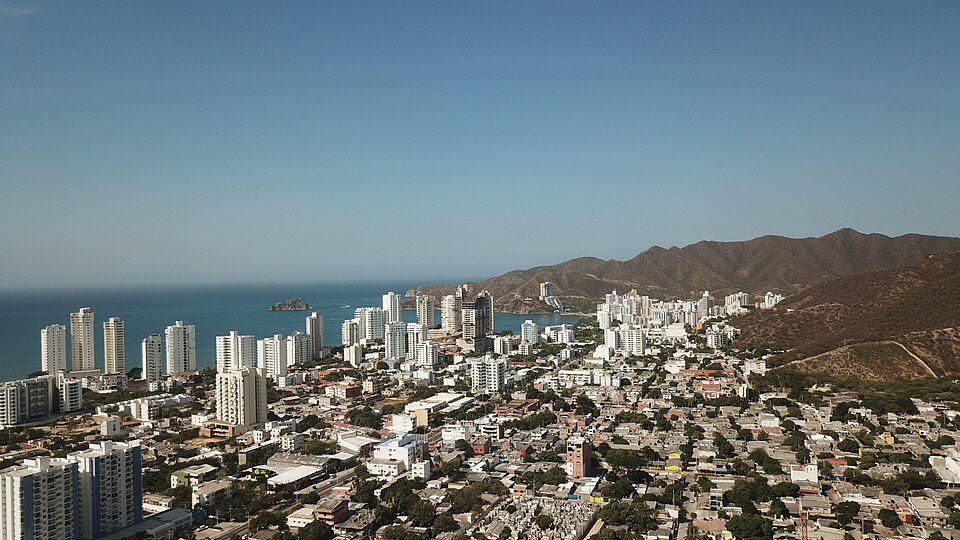
Santa Marta, Colombia: Submarine Cable Landing Point
Santa Marta is a port city situated on the Caribbean coast of northern Colombia, serving as the capital of Magdalena Department. Its position on the Caribbean Sea makes it a natural point of contact between Colombia's land territory and the submarine cable network that runs through Caribbean waters. One submarine cable lands at Santa Marta, connecting it to Colombia's broader coastal infrastructure.
The single cable landing at Santa Marta is the Colombian Festoon, a domestic system that links multiple points along Colombia's own coastline. This makes Santa Marta a participant in an intra-national submarine cable corridor rather than an intercontinental or inter-regional one, distinguishing its role from those of larger Colombian landing points that connect to international systems.
Cables Landing at Santa Marta
The Colombian Festoon is the only submarine cable landing at Santa Marta. The system spans approximately 400 km and reached ready-for-service status in 1997, making it one of the earliest submarine cables in Colombia's infrastructure history. All endpoints of the Colombian Festoon are located within Colombia, meaning the cable operates entirely as a domestic coastal system, linking Colombian landing points to one another along the country's Caribbean and Pacific shorelines.
Regional Context
Within Colombia's ten submarine cable landing points, Santa Marta hosts one cable, placing it in the same tier as Buenaventura, Parque Isla de Salamanca, and Puerto Colombia, each of which also serves a single cable. By comparison, Cartagena leads the country with six cables, followed by Barranquilla with five and Tolú with two. Santa Marta therefore represents a more modest node in Colombia's national submarine cable geography, though it participates in the same foundational coastal system that connects several of these landing points.
Network Role
Santa Marta functions as a single-cable terminus within Colombia's submarine cable network. Its sole connection, the Colombian Festoon, is a domestic system, meaning the landing point enables intra-national coastal connectivity rather than international data exchange. The cable's 1997 RFS date marks it as part of the first generation of submarine cable infrastructure in Colombia, and Santa Marta's inclusion in that system reflects its established role as a coastal port city with access to the Caribbean seabed.
As a one-cable landing point operating on a domestic corridor, Santa Marta occupies a supporting position in Colombia's submarine cable graph, contributing to the resilience of coastal connectivity alongside peers such as Parque Isla de Salamanca and Puerto Colombia, while larger hubs such as Cartagena and Barranquilla anchor the country's international submarine cable reach.
What next: Santa Marta, Colombia in the global directory of cable landing points; see surrounding routes on the interactive submarine cable map or follow live network monitoring.
Other Landing Points in Colombia
Landing Point
- CountryCO Colombia
- Coordinates11.2420°N 74.2053°W
- Connected Cables1
See Real Cable Routes
View actual submarine cable routing from Santa Marta, Colombia - with backbone nodes, distance calculations, and latency estimates
Open Calculator →