Rota, Northern Mariana Islands
Landing Point · MP Northern Mariana Islands
Connected Cables
| Cable | Status |
|---|---|
| Mariana-Guam Cable | Active |
Live Performance
RTT measurements to this landing point from 2026-03-07 through 2026-10-11 - live ICMP round-trip time via our monitoring probes. Recomputed daily. ✓ No anomalies detected in the monitored period.
Measurement sources
| Probe | Location | Samples | Avg |
|---|---|---|---|
| own probe | Minsk BY | 14 | 122.0 ms |
| own probe | Almaty KZ | 10 | 205.4 ms |
| own probe | Tbilisi GE | 9 | 157.6 ms |
| #6427 own probe | Sydney AU | 7 | 283.1 ms |
| own probe | Jerusalem IL | 6 | 203.4 ms |
| #7062 own probe | Cape Town ZA | 4 | 236.3 ms |
| #21570 | control probe | 4 | 10.7 ms |
| #23581 | control probe | 4 | 11.3 ms |
| #27388 | control probe | 4 | 11.9 ms |
| own probe | Odessa UA | 4 | 68.0 ms |
| #6487 | control probe | 3 | 129.1 ms |
| own probe | Sevastopol UA | 3 | 98.8 ms |
| own probe | Kyiv UA | 3 | 60.6 ms |
| #6410 own probe | Sao Paulo BR | 2 | 284.9 ms |
| #6568 own probe | Singapore SG | 2 | 170.1 ms |
| own probe | Moscow RU | 2 | 332.9 ms |
| own probe | Saint Petersburg RU | 1 | 79.8 ms |
About Rota, Northern Mariana Islands
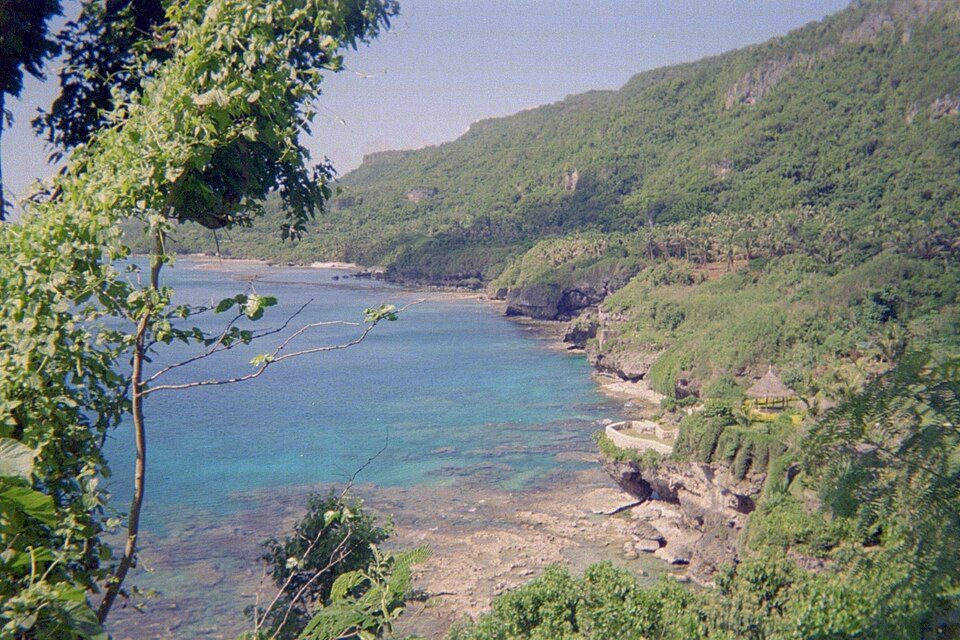
Rota, Northern Mariana Islands: Submarine Cable Landing Point
Rota is the southernmost island of the United States Commonwealth of the Northern Mariana Islands (CNMI), situated in the western Pacific Ocean approximately 74 kilometers north-northeast of Guam. As a landing point in the broader Marianas Archipelago, Rota connects to the submarine cable network through one cable that links it directly to the neighboring territory of Guam. That short cross-strait connection places Rota within an inter-island corridor between two distinct United States-administered Pacific jurisdictions.
The single cable landing at Rota is the Mariana-Guam Cable, a relatively compact system that ties the island into regional Pacific connectivity. This cable, ready for service in 1997, represents the earliest submarine cable infrastructure commissioned in the Northern Mariana Islands. Rota's position as a landing point reflects the practical need to extend fixed submarine connectivity to smaller island communities that would otherwise depend entirely on satellite or terrestrial wireless links.
Cables Landing at Rota, Northern Mariana Islands
The Mariana-Guam Cable is a 268-kilometer system that entered service in 1997. It connects Rota in the Northern Mariana Islands to Guam, the separately administered United States territory lying to the south-southwest. The cable's endpoints span two distinct U.S.-affiliated Pacific jurisdictions, forming a short but direct inter-island link across an open stretch of the western Pacific. No additional technical specifications beyond its length and ready-for-service date appear in the published record for this system.
Regional Context
Within the Northern Mariana Islands, six submarine cable landing points collectively host six cables. Rota, hosting one cable, sits alongside Saipan, San Jose, Sasanlagu, and Sugar Dock (Saipan) - each also served by a single cable - while Tinian stands out as the most connected landing point in the CNMI with five cables. Rota's single-cable status places it among the more modestly served landing points in the archipelago, though it shares that characteristic with the majority of its regional peers.
Network Role
Rota functions as a single-cable terminus, its connectivity tied entirely to the Mariana-Guam Cable and its direct link to Guam. This configuration means that the landing point enables inter-island fixed submarine communication between a CNMI island and Guam, but does not serve as a hub for onward routing to further destinations. The cable's 1997 ready-for-service date marks it as the first submarine cable deployed anywhere in the Northern Mariana Islands, giving Rota a foundational role in the archipelago's undersea network history.
In the regional submarine cable graph, Rota's single connection to Guam positions it as a leaf node - a terminus rather than a transit point - illustrating how smaller island communities in the western Pacific are integrated into fixed undersea infrastructure through direct short-haul links to larger neighboring territories.
What next: Rota, Northern Mariana Islands in the global directory of cable landing points; see surrounding routes on the interactive submarine cable map or follow live network monitoring.
Other Landing Points in Northern Mariana Islands
Landing Point
- CountryMP Northern Mariana Islands
- Coordinates14.1518°N 145.2125°E
- Connected Cables1
See Real Cable Routes
View actual submarine cable routing from Rota, Northern Mariana Islands - with backbone nodes, distance calculations, and latency estimates
Open Calculator →