Poti, Georgia
Landing Point · GE Georgia
Connected Cables
| Cable | Status |
|---|---|
| Caucasus Cable System | Active |
| Georgia-Russia | Active |
| Kardesa | Planned |
Live Performance
RTT measurements to this landing point from 2026-03-02 through 2026-10-16 - live ICMP round-trip time via our monitoring probes. Recomputed daily. ✓ No anomalies detected in the monitored period.
Measurement sources
| Probe | Location | Samples | Avg |
|---|---|---|---|
| #545 | control probe | 162 | 136.0 ms |
| #10159 | control probe | 154 | 86.1 ms |
| own probe | Tbilisi GE | 63 | 6.3 ms |
| #6427 own probe | Sydney AU | 60 | 329.1 ms |
| #2758 | control probe | 50 | 101.7 ms |
| own probe | Sevastopol UA | 9 | 119.7 ms |
| own probe | Odessa UA | 6 | 91.4 ms |
| own probe | Minsk BY | 4 | 91.8 ms |
| own probe | Almaty KZ | 4 | 138.1 ms |
| own probe | Jerusalem IL | 2 | 121.0 ms |
| #6410 own probe | Sao Paulo BR | 1 | 519.2 ms |
| #11992 | control probe | 1 | 111.7 ms |
| own probe | Moscow RU | 1 | 87.6 ms |
| own probe | Balancer IL | 1 | 128.9 ms |
About Poti, Georgia
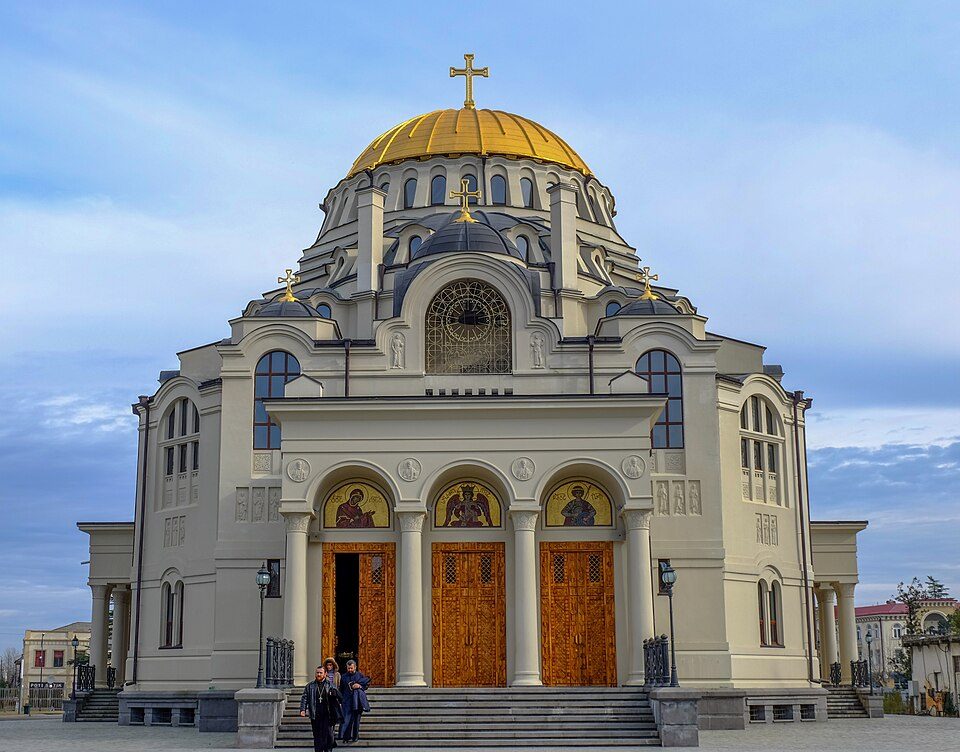
Poti, Georgia: Submarine Cable Landing Point
Poti is a port city situated on the eastern shore of the Black Sea, in the Samegrelo-Zemo Svaneti region of western Georgia. As Georgia's sole submarine cable landing point, Poti anchors the country's entire undersea connectivity infrastructure. Three submarine cables make landfall here, linking Georgia westward across the Black Sea to Bulgaria, Turkey, and Ukraine, and northward to Russia.
The cables landing at Poti collectively span the Black Sea corridor, enabling both intercontinental connectivity through onward terrestrial and marine links and regional interconnection among the Black Sea littoral states. The combination of cables reaching Bulgaria, Turkey, Ukraine, and Russia positions Poti as the single node through which Georgia's submarine network connects to the broader European and Eurasian grid.
Cables Landing at Poti
Kardesa is a submarine cable with a length of 1,385 km, scheduled for ready-for-service in 2027. In addition to Poti, Georgia, the cable connects to landing points in Bulgaria, Turkey, and Ukraine, making it the most geographically extensive cable at this landing point and the one with the broadest set of Black Sea country connections.
Caucasus Cable System spans 1,200 km and entered service in 2008. The cable links Poti to Bulgaria, providing a direct undersea path between the eastern and western shores of the Black Sea. It represents Georgia's longest-standing active international submarine cable connection.
Georgia-Russia is a 433 km cable that became ready for service in 2000, making it the earliest submarine cable to land at Poti. It connects Georgia to Russia, and at 433 km it is the shortest of the three cables terminating at this landing point.
Regional Context
Poti is the only submarine cable landing point in Georgia, meaning all three of the country's submarine cables converge at this single location. There are no other domestic landing points with which Poti shares the national load, making it solely responsible for Georgia's undersea cable geography.
Network Role
Poti functions as a multi-cable terminus rather than a single-cable endpoint, hosting three submarine cables that together reach four other countries across the Black Sea: Bulgaria, Turkey, Ukraine, and Russia. The Caucasus Cable System and Georgia-Russia cables provide established westward and northward links, while the planned Kardesa cable, due in 2027, will expand connectivity to Turkey and Ukraine alongside its Bulgarian endpoint. This combination spans a range of bilateral and multilateral Black Sea routes.
As the sole landing point in Georgia concentrating all of the country's submarine cable connections, Poti occupies a structurally singular position in the regional submarine cable graph, where its continued development directly shapes the entirety of Georgia's undersea network capacity and diversity.
What next: Poti, Georgia in the global directory of cable landing points; see surrounding routes on the interactive submarine cable map or follow live network monitoring.
Our measurements to Poti
Traceroutes from our own measurement points over the last 30 days: usual delay and number of network hops on the way to Poti.
- From RIPE Atlas probes: 104 ms, 12 hops, 41 traces
Last trace: 2026-10-15. Live network map
FAQ
Landing Point
- CountryGE Georgia
- Coordinates42.1508°N 41.6676°E
- Connected Cables3
See Real Cable Routes
View actual submarine cable routing from Poti, Georgia - with backbone nodes, distance calculations, and latency estimates
Open Calculator →