Pevek, Russia
Landing Point · RU Russia
Connected Cables
| Cable | Status |
|---|---|
| Polar Express | Active |
Live Performance
RTT measurements to this landing point from 2026-04-10 through 2026-09-09 - live ICMP round-trip time via our monitoring probes. Recomputed daily. ✓ No anomalies detected in the monitored period.
Measurement sources
| Probe | Location | Samples | Avg |
|---|---|---|---|
| own probe | Minsk BY | 5 | 30.7 ms |
| own probe | Almaty KZ | 5 | 53.9 ms |
| own probe | Moscow RU | 4 | 1.7 ms |
| #6410 own probe | Sao Paulo BR | 3 | 275.9 ms |
| #7062 own probe | Cape Town ZA | 3 | 227.9 ms |
| own probe | Tbilisi GE | 3 | 113.5 ms |
| own probe | Jerusalem IL | 3 | 141.5 ms |
| own probe | Sevastopol UA | 1 | 36.4 ms |
| own probe | Saint Petersburg RU | 1 | 3.8 ms |
About Pevek, Russia
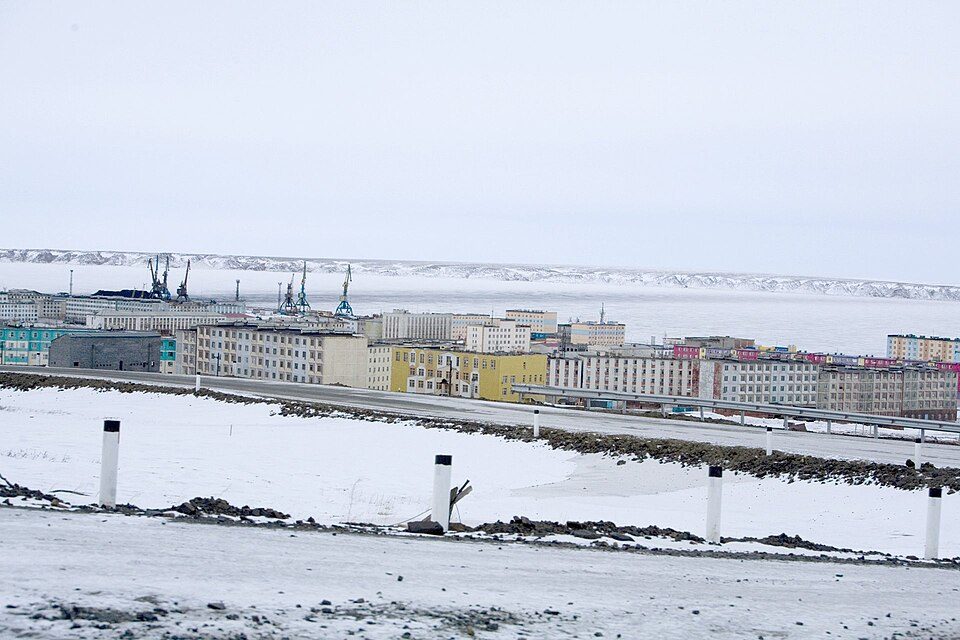
Pevek, Russia: Submarine Cable Landing Point
Pevek is an Arctic port town situated on Chaunskaya Bay in Chukotka Autonomous Okrug, Russia, located above the Arctic Circle approximately 640 kilometres northwest of Anadyr. As the administrative centre of Chaunsky District, it occupies a peninsula on the eastern side of Chaunskaya Bay facing the Routan Islands. One submarine cable lands at Pevek, connecting this remote Arctic settlement to Russia's broader domestic submarine cable network.
The single cable serving Pevek is the Polar Express, a domestic Russian system that links multiple landing points entirely within Russia. At 12,650 kilometres in length, it is a notably long system relative to the Russian average of 4,510 kilometres across the country's 13 submarine cables. Its presence at Pevek represents a significant extension of submarine cable infrastructure into one of Russia's most northerly coastal communities.
Cables Landing at Pevek
Polar Express is a 12,650-kilometre submarine cable system with a ready-for-service year of 2022, noted as draft status. All other landing points on the Polar Express are also located within Russia, making this an entirely domestic cable. The system's considerable length reflects the vast distances involved in connecting remote Far Eastern and Arctic Russian coastal settlements along routes that span a substantial portion of the Russian coastline.
Regional Context
Russia's submarine cable infrastructure encompasses 13 cables spread across 28 landing points. Among these, the majority of landing points in Russia, including Anadyr, Ilyich, Nahodka, Petropavlovsk-Kamchatsky, and Sovetskaya Gavan, host two cables each, while Pevek and Amderma each host a single cable. Pevek ranks within the lower tier of Russian landing points by cable count, sharing its single-cable status with Amderma, though the sheer length of the Polar Express distinguishes Pevek's connection from many shorter domestic links elsewhere in the country.
Network Role
Pevek functions as a single-cable terminus on the Polar Express system, serving as one endpoint in a domestic Russian submarine cable corridor that traverses the country's Arctic and Far Eastern coastlines. The Polar Express, at 12,650 kilometres, is well above the Russian national average cable length, underscoring the logistical challenge of reaching isolated Arctic communities like Pevek by subsea means. As a terminus rather than a multi-cable hub, Pevek's connectivity depends entirely on the Polar Express remaining operational.
Within the broader Russian submarine cable graph, Pevek represents the northernmost extension of a long-haul domestic system, demonstrating how submarine cables serve not only international intercontinental corridors but also intra-national routes connecting geographically isolated Arctic settlements to the rest of the Russian network.
What next: Pevek, Russia in the global directory of cable landing points; see surrounding routes on the interactive submarine cable map or follow live network monitoring.
Other Landing Points in Russia
Landing Point
- CountryRU Russia
- Coordinates69.7029°N 170.3070°E
- Connected Cables1
See Real Cable Routes
View actual submarine cable routing from Pevek, Russia - with backbone nodes, distance calculations, and latency estimates
Open Calculator →