Pangai, Tonga
Landing Point · TO Tonga
1
Connected Cables
TO
Country
19.81°
Latitude
174.35°
Longitude
Ctrl + Scroll to zoom
Connected Cables
| Cable | Status |
|---|---|
| Tonga Domestic Cable Extension (TDCE) | Active |
Live Performance
68
measurements
15
probes
219
days monitored
303.6
ms avg RTT
0
anomalies
RTT measurements to this landing point from 2026-03-09 through 2026-10-14 - live ICMP round-trip time via our monitoring probes. Recomputed daily. ✓ No anomalies detected in the monitored period.
Measurement sources
| Probe | Location | Samples | Avg |
|---|---|---|---|
| own probe | Jerusalem IL | 10 | 358.7 ms |
| own probe | Almaty KZ | 8 | 427.0 ms |
| #6410 own probe | Sao Paulo BR | 7 | 366.8 ms |
| #6427 own probe | Sydney AU | 7 | 50.3 ms |
| own probe | Minsk BY | 7 | 404.1 ms |
| own probe | Tbilisi GE | 6 | 338.5 ms |
| own probe | Balancer IL | 6 | 355.4 ms |
| #6487 | control probe | 4 | 142.8 ms |
| #11691 | control probe | 3 | 101.1 ms |
| #64391 | control probe | 3 | 332.7 ms |
| own probe | Moscow RU | 2 | 374.1 ms |
| #1018023 | control probe | 2 | 57.5 ms |
| #6568 own probe | Singapore SG | 1 | 240.3 ms |
| own probe | Sevastopol UA | 1 | 419.8 ms |
| own probe | Odessa UA | 1 | 331.5 ms |
About Pangai, Tonga
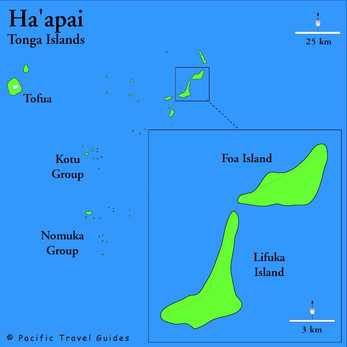
Pangai: A Key Link in Tonga's Domestic Connectivity
Pangai, a small settlement on the island of Lifuka in Tonga's Haʻapai group, serves as one of the nation's three submarine cable landing points. While its role may seem modest compared to larger hubs like Nuku'alofa or Neiafu, Pangai plays an essential part in Tonga's domestic network, connecting the scattered islands of this Pacific archipelago.The Tonga Domestic Cable Extension
The sole cable landing at Pangai is the Tonga Domestic Cable Extension (TDCE), which became operational in 2018. Spanning 410 kilometers, this cable links Pangai to two other landing points in Tonga: Neiafu in the Vavaʻu group and Nuku'alofa on the main island of Tongatapu. Unlike international cables that connect Tonga to the broader world, the TDCE is purely domestic, stitching together the country's islands into a unified communications network. This domestic focus is critical for Tonga's geography. With over 170 islands spread across 700,000 square kilometers of ocean, reliable connectivity between islands is essential for everything from government services to education and commerce. Pangai's inclusion in this chain ensures that the Haʻapai group is not left behind in Tonga's digital landscape.Regional Context: A Smaller but Significant Player
Among Tonga's three landing points, Pangai hosts just one cable, while Neiafu and Nuku'alofa each host two. Despite this, Pangai's role is far from secondary. It ranks in the top 33% of Tonga's landing points by cable count, a testament to the country's limited but carefully planned submarine cable infrastructure. The TDCE ensures that Pangai remains connected to Tonga's broader domestic network, even though it does not directly link to international cables. The average length of submarine cables landing in Tonga is 3,211 kilometers, but the TDCE's shorter span reflects its specific function: connecting islands within Tonga rather than bridging the nation to the outside world.Latency Insights: A Window into Pangai's Connectivity
GeoCables' monitoring of Pangai's connectivity reveals intriguing latency data. Across 45 completed checks from 11 source cities, the average round-trip latency to Pangai is 318 milliseconds, with the best observed latency at 50 milliseconds. These figures underscore the challenges of connecting remote island communities to global networks, even through domestic cables. However, the TDCE's performance ensures that Pangai remains a functional and reliable node in Tonga's communications system.Conclusion
Pangai may not be the largest or most connected landing point in Tonga, but its role is indispensable for the Haʻapai group. The Tonga Domestic Cable Extension ties Pangai into the nation's domestic network, ensuring that even remote islands have access to modern connectivity. As Tonga continues to navigate the challenges of connecting its dispersed islands, Pangai stands as a testament to the importance of domestic cables in bridging local distances.What next: Pangai, Tonga in the global directory of cable landing points; see surrounding routes on the interactive submarine cable map or follow live network monitoring.
Other Landing Points in Tonga
Landing Point
- CountryTO Tonga
- Coordinates19.8114°S 174.3503°W
- Connected Cables1
See Real Cable Routes
View actual submarine cable routing from Pangai, Tonga - with backbone nodes, distance calculations, and latency estimates
Open Calculator →
Submarine cables
Land fiber
Live probes