Ola, Russia
Landing Point · RU Russia
Connected Cables
| Cable | Status |
|---|---|
| Far East Submarine Cable System | Active |
Live Performance
RTT measurements to this landing point from 2026-04-14 through 2026-09-22 - live ICMP round-trip time via our monitoring probes. Recomputed daily. ✓ No anomalies detected in the monitored period.
Measurement sources
| Probe | Location | Samples | Avg |
|---|---|---|---|
| own probe | Almaty KZ | 11 | 92.9 ms |
| #6410 own probe | Sao Paulo BR | 9 | 321.4 ms |
| own probe | Moscow RU | 6 | 1.6 ms |
| #7062 own probe | Cape Town ZA | 5 | 228.1 ms |
| own probe | Minsk BY | 4 | 11.5 ms |
| own probe | Saint Petersburg RU | 4 | 18.0 ms |
| own probe | Tbilisi GE | 2 | 117.1 ms |
| own probe | Jerusalem IL | 2 | 138.6 ms |
| own probe | Sevastopol UA | 1 | 37.8 ms |
About Ola, Russia
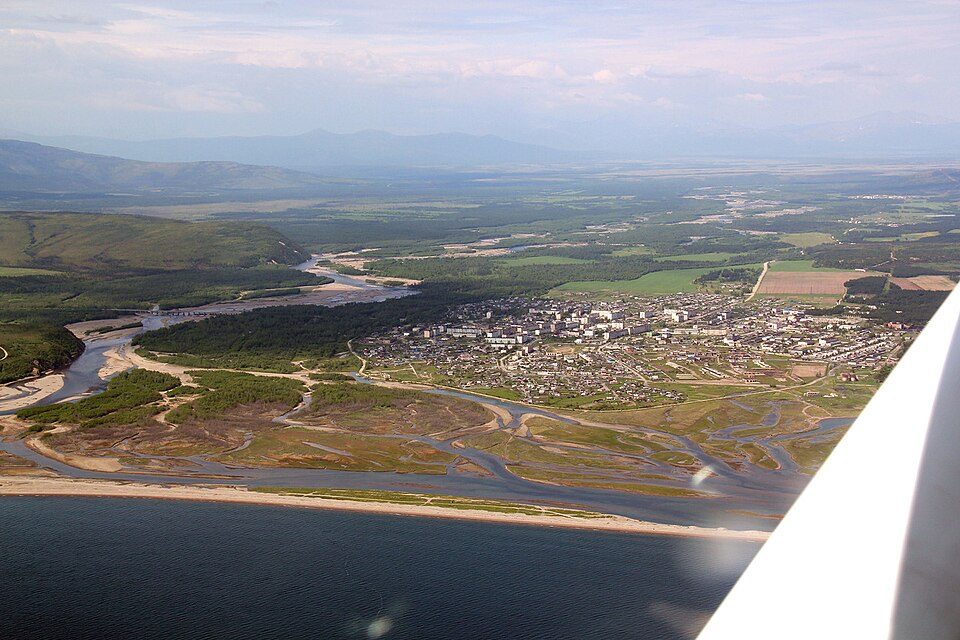
Ola, Russia: Submarine Cable Landing Point
Ola is an urban locality situated on the shore of the Sea of Okhotsk in Magadan Oblast, Russia, approximately 27 kilometres east of the regional centre of Magadan. Its coastal position on this arm of the northwestern Pacific Ocean makes it a viable terminus for submarine cable infrastructure serving Russia's Far East. One submarine cable lands at Ola, connecting it to the broader domestic cable network of Russia's eastern seaboard.
The single cable landing at Ola is the Far East Submarine Cable System, a domestically oriented system that links Russian landing points along the Far Eastern coast. The corridor this cable enables is an intra-Russian one, running between points within Russia rather than providing international connectivity. This places Ola within a network designed to strengthen telecommunications links across Russia's vast and sparsely connected eastern territories.
Cables Landing at Ola
The Far East Submarine Cable System is the sole submarine cable landing at Ola. The system stretches 1,855 kilometres and reached its ready-for-service date in 2016, with its status recorded as draft. All other landing points on this cable are also located in Russia, making it an entirely domestic submarine cable system. It provides a subsea route connecting several coastal communities along Russia's Far Eastern coast, with Ola serving as one of its terminus or waypoint landings along the Sea of Okhotsk.
Regional Context
Russia hosts 13 submarine cables across 28 landing points, and Ola, with one cable, sits in the lower tier of that national infrastructure by cable count, ranking within the top 82 percent of Russian landing points. Several other Russian landing points in the Far East - including Anadyr, Nahodka, Petropavlovsk-Kamchatsky, Sovetskaya Gavan, and Ilyich - each serve two cables, giving them a broader degree of connectivity than Ola currently provides. Amderma is the only other Russian landing point that shares Ola's single-cable profile.
Network Role
Ola functions as a single-cable terminus within the Far East Submarine Cable System, contributing to an intra-Russian coastal network rather than serving as a junction for international traffic. Its role is specifically domestic, linking a remote Sea of Okhotsk community into a subsea infrastructure layer that spans 1,855 kilometres along Russia's eastern margins. The 2016 ready-for-service date of the Far East Submarine Cable System places Ola among the more recently connected points in Russia's national submarine cable development, which began in 2000.
Within the Russian submarine cable graph, Ola represents a geographically isolated node on the Sea of Okhotsk coast. As a single-cable landing point in a country where the average cable length reaches 4,510 kilometres, the relatively compact Far East Submarine Cable System at Ola reflects the particular demand of connecting smaller coastal settlements that are otherwise served by limited overland infrastructure across Russia's Far Eastern interior.
What next: Ola, Russia in the global directory of cable landing points; see surrounding routes on the interactive submarine cable map or follow live network monitoring.
Other Landing Points in Russia
Landing Point
- CountryRU Russia
- Coordinates59.5833°N 151.2834°E
- Connected Cables1
See Real Cable Routes
View actual submarine cable routing from Ola, Russia - with backbone nodes, distance calculations, and latency estimates
Open Calculator →