Leava, Wallis and Futuna
Landing Point · WF Wallis and Futuna
1
Connected Cables
WF
Country
14.30°
Latitude
178.16°
Longitude
Ctrl + Scroll to zoom
Connected Cables
| Cable | Status |
|---|---|
| Tui-Samoa | Active |
Live Performance
29
measurements
9
probes
105
days monitored
184.5
ms avg RTT
0
anomalies
RTT measurements to this landing point from 2026-07-02 through 2026-10-15 - live ICMP round-trip time via our monitoring probes. Recomputed daily. ✓ No anomalies detected in the monitored period.
Measurement sources
| Probe | Location | Samples | Avg |
|---|---|---|---|
| #6427 own probe | Sydney AU | 5 | 221.8 ms |
| own probe | Almaty KZ | 5 | 165.2 ms |
| own probe | Jerusalem IL | 5 | 129.9 ms |
| own probe | Balancer IL | 5 | 122.0 ms |
| #6487 | control probe | 4 | 151.7 ms |
| #60575 | control probe | 2 | 336.1 ms |
| #6410 own probe | Sao Paulo BR | 1 | 376.0 ms |
| #6568 own probe | Singapore SG | 1 | 155.2 ms |
| #1018023 | control probe | 1 | 344.0 ms |
About Leava, Wallis and Futuna
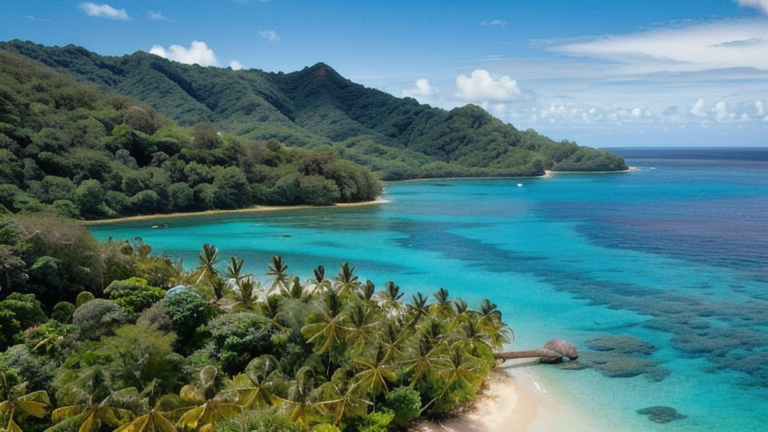
Leava: Connecting Futuna to the World
Leava, located on the island of Futuna in the French Pacific territory of Wallis and Futuna, is a key landing point for the Tui-Samoa submarine cable. This cable, which became operational in 2018, is the sole international link for Futuna, connecting it to Samoa and Fiji, as well as to its sibling island Wallis via Mata-Utu. Despite its modest size as the largest village in the chiefdom of Sigave, Leava plays an outsized role in ensuring Futuna’s connectivity to the outside world.The Tui-Samoa Cable: A Lifeline for Futuna
The Tui-Samoa cable spans 1693 km and connects six landing points across the Pacific, including Apia, Tuasivi, Savusavu, Suva, Mata-Utu, and Leava. For Futuna, this cable is the only submarine connection, making Leava a critical node in the island’s communications network. From Leava, data flows through the cable to reach larger hubs in Samoa and Fiji, which serve as gateways to global networks. Wallis and Futuna’s submarine cable infrastructure is limited, with just two landing points-Leava on Futuna and Mata-Utu on Wallis-served by this single cable. This setup reflects the territory’s isolated geography and small population, but it also highlights the importance of the Tui-Samoa cable in bridging the vast distances between these islands and the broader Pacific region.Latency and Performance: A Window into Connectivity
GeoCables has conducted 17 latency checks from 12 source cities to Leava, providing unique insights into the cable’s performance. The average round-trip latency measured was 198 milliseconds, with the best observed latency being 57 milliseconds. These figures demonstrate the cable’s ability to provide relatively stable and responsive connectivity, even across the vast expanse of the Pacific Ocean.Leava’s Role in the Local and Regional Network
As the administrative centre of Sigave, Leava is not only a civic hub but also a technological gateway for Futuna. The Tui-Samoa cable ensures that residents, businesses, and institutions in Leava and the surrounding areas can access modern communication services, from internet browsing to video conferencing. While Wallis and Futuna’s overall cable infrastructure is minimal, the presence of landing points in both Leava and Mata-Utu ensures that each island in the territory has direct access to the cable network. Leava’s connectivity also supports regional ties within Wallis and Futuna. The cable’s landing point in Mata-Utu on Wallis complements Leava’s role, creating a chain that links the two islands to each other and to international destinations. This interconnectedness is essential for maintaining administrative coordination, cultural exchange, and economic activities between the islands.Conclusion
Leava may be a small village, but its submarine cable landing point is a gateway to the world for Futuna. Through the Tui-Samoa cable, Leava connects this remote Pacific island to Samoa, Fiji, and beyond, ensuring that Futuna remains part of the global digital landscape. With reliable latency and a direct link to international hubs, Leava exemplifies how strategic infrastructure can transform even the most isolated places into connected communities.What next: Leava, Wallis and Futuna in the global directory of cable landing points; see surrounding routes on the interactive submarine cable map or follow live network monitoring.
Other Landing Points in Wallis and Futuna
Landing Point
- CountryWF Wallis and Futuna
- Coordinates14.2968°S 178.1581°W
- Connected Cables1
See Real Cable Routes
View actual submarine cable routing from Leava, Wallis and Futuna - with backbone nodes, distance calculations, and latency estimates
Open Calculator →
Submarine cables
Land fiber
Live probes