Half Moon Bay, Cayman Islands
Landing Point · KY Cayman Islands
Connected Cables
| Cable | Status |
|---|---|
| Cayman-Jamaica Fiber System (CJFS) | Active |
| Maya-1.2 | Active |
Live Performance
RTT measurements to this landing point from 2026-06-21 through 2026-10-16 - live ICMP round-trip time via our monitoring probes. Recomputed daily. ✓ No anomalies detected in the monitored period.
Measurement sources
| Probe | Location | Samples | Avg |
|---|---|---|---|
| #1015496 | control probe | 59 | 50.9 ms |
| #6410 own probe | Sao Paulo BR | 1 | 137.1 ms |
| #6427 own probe | Sydney AU | 1 | 214.9 ms |
| #6487 | control probe | 1 | 253.0 ms |
| own probe | Minsk BY | 1 | 164.8 ms |
| #1015500 | control probe | 1 | 41.9 ms |
| own probe | Saint Petersburg RU | 1 | 158.1 ms |
| own probe | Kyiv UA | 1 | 168.5 ms |
About Half Moon Bay, Cayman Islands
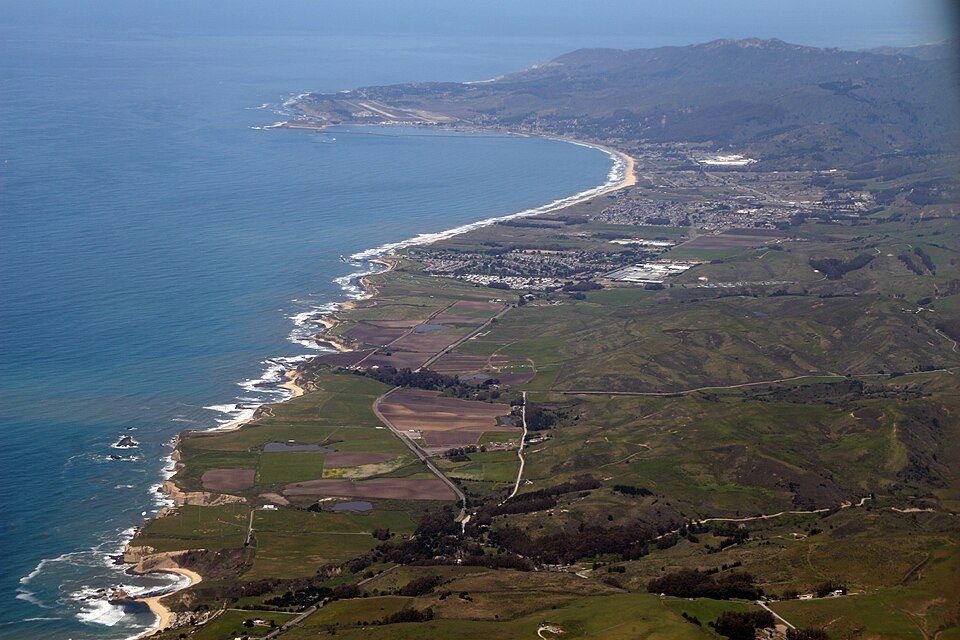
Half Moon Bay, Cayman Islands: Submarine Cable Landing Point
Half Moon Bay is a coastal landing point in the Cayman Islands, a British Overseas Territory in the western Caribbean Sea. Two submarine cables make landfall here, making Half Moon Bay the more connected of the two submarine cable landing points in the Cayman Islands. The cables landing at this location establish connectivity across the Caribbean and extend northward to the United States, enabling both regional inter-island links and broader intercontinental reach.
The two cables landing at Half Moon Bay - Maya-1.2 and the Cayman-Jamaica Fiber System (CJFS) - together connect the Cayman Islands to Honduras, Jamaica, and the United States. This combination of routes positions Half Moon Bay as a point where Caribbean regional connectivity and North American connectivity converge within a single landing location.
Cables Landing at Half Moon Bay, Cayman Islands
Maya-1.2 is a submarine cable system spanning approximately 2,386 km, with a ready-for-service date of 2000. In addition to Half Moon Bay in the Cayman Islands, Maya-1.2 connects to Honduras and the United States, forming a corridor that links the western Caribbean to the North American mainland.
Cayman-Jamaica Fiber System (CJFS) is a submarine cable system spanning approximately 1,197 km, with a ready-for-service date of 1997, making it the earlier of the two cables at this landing point. CJFS connects the Cayman Islands to Jamaica, providing a direct inter-island link between two of the Caribbean's prominent island territories. The cable's relatively shorter length reflects the geographic proximity of its endpoints within the Caribbean basin.
Regional Context
The Cayman Islands hosts two submarine cable landing points in total: Half Moon Bay and Cayman Brac. While Cayman Brac accommodates one cable, Half Moon Bay serves two, making it the principal landing point within the Cayman Islands' submarine cable infrastructure. The country's first cable came into service in 1997, and both of its cables are accounted for at these two locations.
Network Role
Half Moon Bay functions as a multi-cable hub within the Cayman Islands, terminating both of the cables that together form the entirety of the country's submarine cable connectivity. Through Maya-1.2, the landing point participates in a corridor connecting Central America and the United States; through CJFS, it maintains a direct link to Jamaica. These two routes together span distinct geographic directions - northward toward North America and southward toward the broader Caribbean island chain.
As the landing point that carries the full weight of the Cayman Islands' two-cable submarine network, Half Moon Bay occupies a central position in the regional submarine cable graph, connecting the territory simultaneously to its Caribbean neighbors and to the North American mainland.
What next: Half Moon Bay, Cayman Islands in the global directory of cable landing points; see surrounding routes on the interactive submarine cable map or follow live network monitoring.
Our measurements to Half Moon Bay
Traceroutes from our own measurement points over the last 30 days: usual delay and number of network hops on the way to Half Moon Bay.
- From RIPE Atlas probes: 42 ms, 12 hops, 13 traces
Last trace: 2026-10-15. Live network map
Other Landing Points in Cayman Islands
Landing Point
- CountryKY Cayman Islands
- Coordinates19.2830°N 81.1668°W
- Connected Cables2
See Real Cable Routes
View actual submarine cable routing from Half Moon Bay, Cayman Islands - with backbone nodes, distance calculations, and latency estimates
Open Calculator →