Durres, Albania
Landing Point · AL Albania
Connected Cables
| Cable | Status |
|---|---|
| Adria-1 | Active |
| Italy-Albania | Active |
Live Performance
RTT measurements to this landing point from 2026-03-07 through 2026-10-14 - live ICMP round-trip time via our monitoring probes. Recomputed daily. ✓ No anomalies detected in the monitored period.
Measurement sources
| Probe | Location | Samples | Avg |
|---|---|---|---|
| #1011241 | control probe | 89 | 21.6 ms |
| #1014099 | control probe | 89 | 53.9 ms |
| #6427 own probe | Sydney AU | 24 | 294.0 ms |
| own probe | Odessa UA | 22 | 54.8 ms |
| own probe | Kyiv UA | 17 | 32.3 ms |
| own probe | Sevastopol UA | 6 | 121.8 ms |
| own probe | Minsk BY | 2 | 49.3 ms |
| #6410 own probe | Sao Paulo BR | 1 | 0.5 ms |
| own probe | Almaty KZ | 1 | 117.4 ms |
| own probe | Tbilisi GE | 1 | 45.5 ms |
| own probe | Jerusalem IL | 1 | 77.4 ms |
| own probe | Moscow RU | 1 | 70.0 ms |
About Durres, Albania
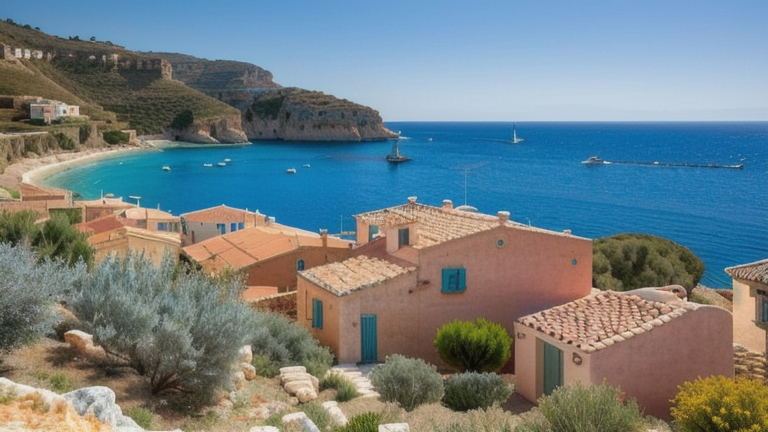
Durres is Albania’s primary Adriatic port and one of the oldest continuously inhabited cities on the Balkan peninsula, with roots dating back to 627 BC. As a submarine cable landing site, Durres anchors two undersea systems that carry the bulk of Albania’s international internet traffic toward Italy and the wider European backbone. The port’s strategic location - less than 200 kilometres across the Adriatic from the Italian coastline - makes it a natural cable terminus for short, low-latency links to Bari and beyond. This proximity gives Albania one of the shortest transit paths to a tier-one European interconnection point anywhere on the continent.
Albania’s international connectivity has historically depended on a small number of terrestrial and submarine paths into Greece, Italy, and Montenegro. The two cables landing at Durres - Italy-Albania 1 and Adria-1 - serve as redundant Adriatic crossings that give Albanian operators geographic diversity against cuts in the single land route via the Balkans. Any prolonged disruption to either system would measurably degrade Albania’s connectivity to Europe, which is why operators treat them as a matched pair rather than as independent resources.
Operators landing at Durres include Albtelecom, the incumbent national carrier, and OTE Globe, the international arm of Deutsche Telekom’s Greek subsidiary. The landing station sits on the city waterfront close to the commercial port, with terrestrial backhaul running east to Tirana - Albania’s capital and the country’s main interconnection point - roughly 35 kilometres inland.
For external observers, Durres is a useful vantage point on Balkan connectivity: a small country’s entire submarine link footprint concentrated at a single harbour, with dependencies that are legible from the outside and recoverable via well-mapped alternatives. The Adriatic is shallow and densely fished, which has historically meant higher cable fault rates compared to deep-ocean crossings; restoration times have nevertheless been acceptable thanks to the short cable lengths involved.
GeoCables monitors latency from external vantage points through both Italy-Albania cables and cross-references observed round-trip times against the distance-based physical lower bound. Any deviation exceeding our anomaly threshold for an Albania target is flagged against whichever of the two systems is currently active, producing an auditable incident log that complements operator-side reporting.
What next: Durres, Albania in the global directory of cable landing points; see surrounding routes on the interactive submarine cable map or follow live network monitoring.
Other Landing Points in Albania
Landing Point
- CountryAL Albania
- Coordinates41.3167°N 19.4501°E
- Connected Cables2
See Real Cable Routes
View actual submarine cable routing from Durres, Albania - with backbone nodes, distance calculations, and latency estimates
Open Calculator →