Balboa, Panama
Landing Point · PA Panama
Connected Cables
| Cable | Status |
|---|---|
| Alisios | Planned |
| Curie | Active |
| Pacific Caribbean Cable System (PCCS) | Active |
Live Performance
RTT measurements to this landing point from 2026-03-07 through 2026-10-13 - live ICMP round-trip time via our monitoring probes. Recomputed daily. ✓ No anomalies detected in the monitored period.
Measurement sources
| Probe | Location | Samples | Avg |
|---|---|---|---|
| #6410 own probe | Sao Paulo BR | 43 | 162.7 ms |
| own probe | Minsk BY | 27 | 201.6 ms |
| own probe | Saint Petersburg RU | 27 | 175.2 ms |
| #6427 own probe | Sydney AU | 25 | 263.7 ms |
| #6487 | control probe | 20 | 291.9 ms |
| own probe | Almaty KZ | 7 | 285.0 ms |
| own probe | Tbilisi GE | 6 | 225.1 ms |
| own probe | Jerusalem IL | 5 | 212.5 ms |
| #1004305 | control probe | 3 | 2.0 ms |
| #1010811 | control probe | 3 | 1.7 ms |
| own probe | Kyiv UA | 3 | 186.6 ms |
| #1004303 | control probe | 2 | 2.7 ms |
| own probe | Moscow RU | 2 | 197.6 ms |
| #6568 own probe | Singapore SG | 1 | 309.2 ms |
| #65007 | control probe | 1 | 4.4 ms |
About Balboa, Panama
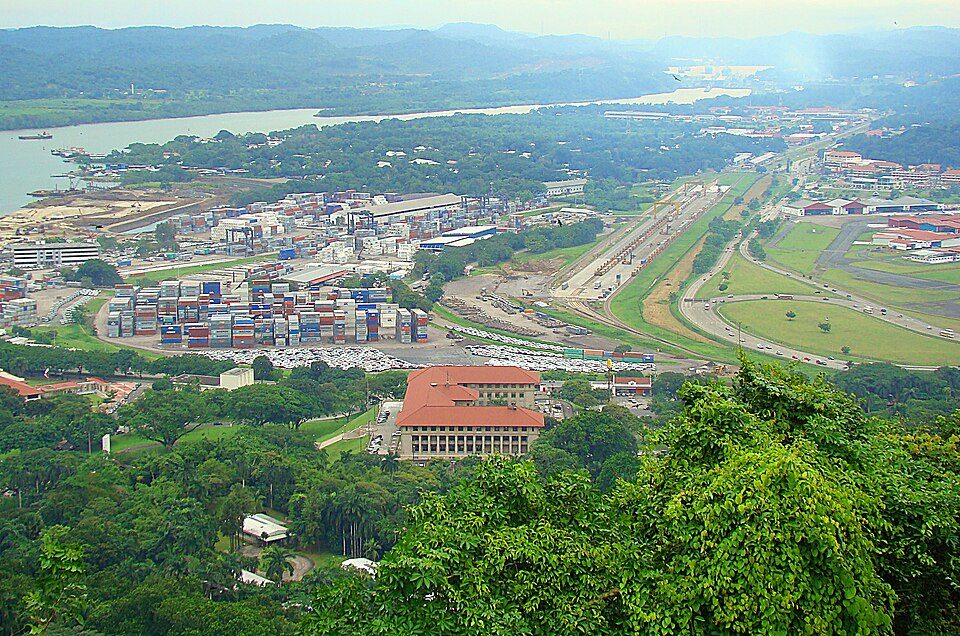
Balboa, Panama: Submarine Cable Landing Point
Balboa is a district of Panama City situated at the Pacific entrance to the Panama Canal, on the southwestern coast of Panama. Its position on the Pacific Ocean makes it a natural terminus for submarine cables traversing the eastern Pacific and connecting the Americas. Two submarine cables land at Balboa, linking Panama to an arc of nations that extends from the western coast of South America northward to the United States, and across the Caribbean to island territories.
The two cables landing at Balboa serve distinct but complementary corridors. One connects Panama directly to the west coast of South America and onward to the continental United States, while the other weaves through Caribbean island nations and Colombia before reaching the United States. Together, they position Balboa as a two-cable landing point with both Pacific-facing and Caribbean-connected routes, enabling inter-regional connectivity across multiple ocean segments.
Cables Landing at Balboa
Curie is a submarine cable stretching 10,476 km, with a ready-for-service date of 2020. From Balboa, it connects Panama to Chile to the south and to the United States to the north, forming a long Pacific corridor along the western coastline of the Americas. With a total length exceeding ten thousand kilometers, Curie is a significant trans-Pacific-coast system linking three nations across a wide latitudinal span.
Pacific Caribbean Cable System (PCCS) spans 6,163 km and entered service in 2015. This cable connects Balboa to a broader set of territories and nations including Aruba, Colombia, Curaçao, Ecuador, and the United States, in addition to other landing points within Panama itself. The PCCS spans both Pacific and Caribbean segments, reflecting its hybrid routing across two distinct ocean corridors. Its multi-country reach makes it the more geographically diverse of the two cables landing at Balboa.
Regional Context
Within Panama's seven submarine cable landing points, Balboa ranks alongside Fort Amador and Panama City, each of which also hosts two cables. Maria Chiquita leads the country with four cables, while Colón, Cristóbal, and Ustupo each host a single cable. Balboa therefore sits in the middle tier of Panama's landing point infrastructure by cable count, sharing that position with two other locations on the Pacific and canal-adjacent coastline.
Network Role
Balboa functions as a two-cable terminus on Panama's Pacific coast, enabling connections that span from Chile in the south to the United States in the north, with additional reach into Colombia, Ecuador, Aruba, and Curaçao via the PCCS. This dual-cable configuration means Balboa is not a single-route terminus but rather a modest hub where Pacific coastal routing and Caribbean island routing converge at the same landing point. The Curie cable adds a long-haul Pacific dimension, while PCCS provides multi-node Caribbean and South American connectivity.
In the broader submarine cable graph of Panama, Balboa contributes to the country's overall portfolio of nine cables across seven landing points, extending Panama's reach in multiple directions from a single Pacific-facing site. Its placement at the Pacific entrance to the Panama Canal reinforces its geographic logic as a point where trans-oceanic routing and continental American connectivity intersect.
What next: Balboa, Panama in the global directory of cable landing points; see surrounding routes on the interactive submarine cable map or follow live network monitoring.
Our measurements to Balboa
Traceroutes from our own measurement points over the last 30 days: usual delay and number of network hops on the way to Balboa.
- From RIPE Atlas probes: 217 ms, 13 hops, 3 traces
Last trace: 2026-10-13. Live network map
Other Landing Points in Panama
FAQ
Landing Point
- CountryPA Panama
- Coordinates8.9500°N 79.5667°W
- Connected Cables3
See Real Cable Routes
View actual submarine cable routing from Balboa, Panama - with backbone nodes, distance calculations, and latency estimates
Open Calculator →